Everest Base Camp Trek Itinerary: Complete Day by Day (12 days)
8 Jul 2026 11 min to read
The itinerary distinguishes between 12 trekking days and 15 total days including Kathmandu arrival, preparation, and departure. It outlines the Everest Base Camp route day by day, with altitudes, distances, acclimatization stops, and the hardest sections of the journey.
It also explains trek logistics and planning needs, including typical daily walking times, weather-related Lukla flight delays, the need for a licensed guide, and why extra buffer time in Kathmandu is recommended.
The Everest Base Camp Trek itself — Lukla to Lukla — takes 12 days. That includes two built-in acclimatization days. Add Kathmandu arrival, a full prep day for permits and gear checks, and your departure day, and the full Everest Base Camp trek itinerary runs 15 days door to door.
Both numbers are real. The “12-day” label refers to the trekking portion. The “15-day” count is what you should tell your employer when you’re booking time off.
This post breaks down the Everest Base Camp trek route day by day — every altitude, every key landmark, every section where people tend to struggle. Whether you’re mapping out flights, comparing it to other treks, or just trying to picture what each day actually looks like, this guide covers the full route so you can plan with actual confidence.
Lets get into it.
Trek at Glance
- Duration: 12 days trekking / 15 days total (including Kathmandu)
- Max altitude: 5,644.5m (Kala Patthar)
- Distance: ~130km (80 miles) round trip
- Difficulty: Moderate
- Best seasons: Spring (March–May) and Autumn (September–November)
- Starting point: Lukla, reached by a short flight from Kathmandu
- Who it’s for: No technical climbing skills needed — you don’t have to be an athlete, but you should be comfortable walking 5–8 hours a day on uneven terrain
The Everest Base camp trek Itinerary, Day by Day
| Day | Route | Altitude | Distance / Time |
| 1 | Arrive Kathmandu | 1,400m | 30-min transfer |
| 2 | Trek preparation day | — | — |
| 3 | Fly to Lukla, trek to Phakding | 2,860m → 2,610m | 45-min flight + 3–4 hr trek, 8km |
| 4 | Phakding to Namche Bazaar | 2,610m → 3,440m | 5–6 hr trek, 11km |
| 5 | Acclimatization day in Namche | Stays at 3,440m | 4–5 hr day hike, 7km |
| 6 | Namche to Tengboche | 3,440m → 3,867m | 5–6 hr trek, 9km |
| 7 | Tengboche to Dingboche | 3,867m → 4,410m | 5–6 hr trek, 10km |
| 8 | Dingboche to Lobuche | 4,410m → 4,940m | 5–6 hr trek, 8km |
| 9 | Lobuche to Everest Base Camp via Gorak Shep | 4,940m → 5,364m | 8–9 hr trek, 11km |
| 10 | Kala Patthar sunrise, descend to Pheriche | 5,644.5m → 4,371m | 7–8 hr trek, 16km |
| 11 | Pheriche to Tengboche | 4,371m → 3,867m | 7 hr trek, 16.5km |
| 12 | Tengboche to Namche Bazaar | 3,867m → 3,440m | 5 hr trek, 9km |
| 13 | Namche to Lukla | 3,440m → 2,860m | 7–8 hr trek, 19km |
| 14 | Fly Lukla to Kathmandu | 2,860m → 1,400m | 45-min flight |
| 15 | Departure | — | — |
The Full Day-by-Day Breakdown
Day 1: Arrive in Kathmandu (1,400m)
You’ll be met at Tribhuvan International Airport and transferred to your hotel, a short 30-minute drive. Most of the day is free — a good chance to shake off jet lag, wander Thamel’s narrow streets, and get your gear sorted before things get moving. If your flight lands early, this is also the day to double-check your kit against your packing list, since Lukla is your last real chance to buy anything you’ve forgotten.
Day 2: Trek Preparation Day, Kathmandu
A working day rather than a rest day. Your permits get sorted, you’ll get a full trek briefing, and you’ll meet your guide for the first time. Afternoons are usually left open — Kathmandu’s Durbar Square and Boudhanath Stupa are both worth the half-day if you haven’t seen them before, and both are a manageable taxi ride from most hotels in Thamel.
Note: (Optional sightseeing in Kathmandu is at an additional cost.)
Day 3: Fly to Lukla, Trek to Phakding (2,860m → 2,610m)
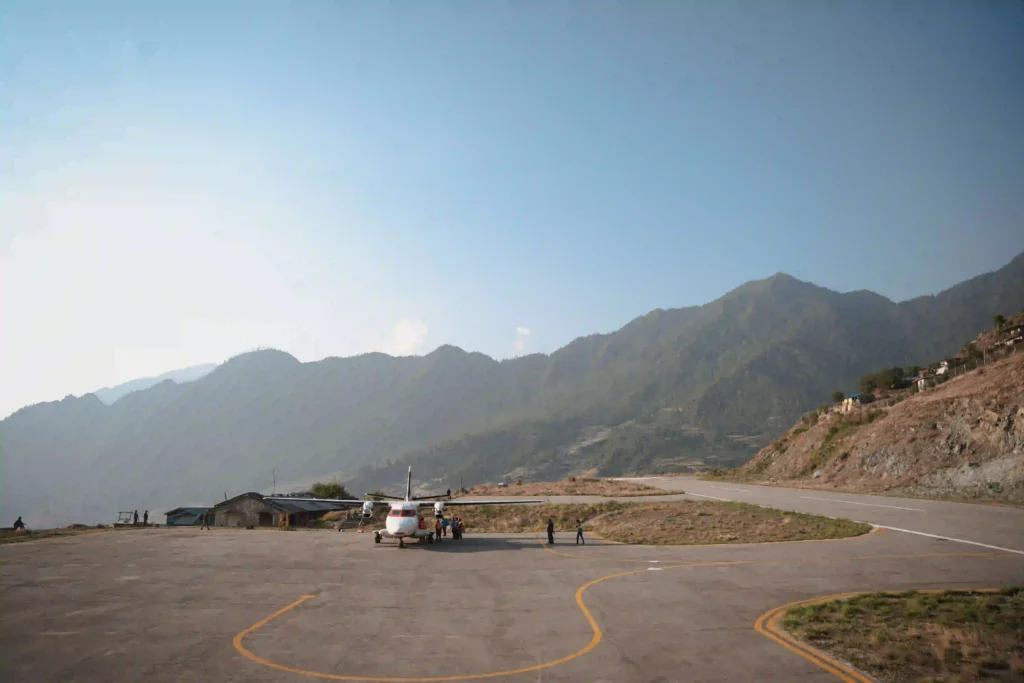
The trek proper begins with one of the more talked-about flights in the world — a short, scenic 45-minute hop from Kathmandu to Lukla’s Tenzing-Hillary Airport, one of the more dramatic short runways you’ll ever land on. From there, it’s a gentle 3–4 hour walk down through Chhuplung, Thado Koshi, and Ghat to Phakding, following the Dudh Koshi river the whole way. Note the elevation: you actually lose altitude today, dropping from 2,860m to 2,610m — a deliberately easy start before the real climbing begins.
Day 4: Phakding to Namche Bazaar (2,610m → 3,440m)
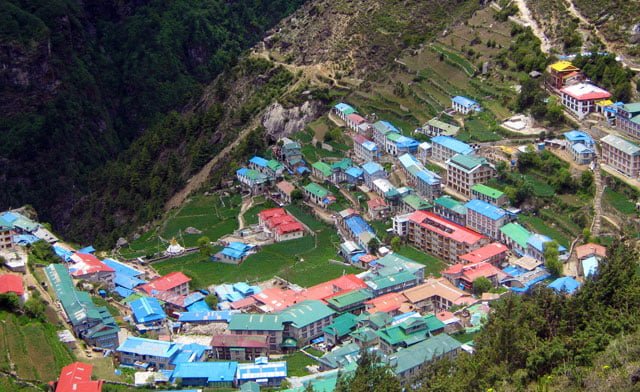
This is the first genuinely demanding day. You’ll pass through Monjo and Jorsale, where your permits get checked at the Sagarmatha National Park entrance, and cross the Hillary Suspension Bridge — the tall one draped in prayer flags that shows up in nearly every EBC photo ever taken. From there it’s a long, steady climb into Namche Bazaar, gaining roughly 830m over 11km and 5–6 hours. On a clear day, about two-thirds of the way up, you’ll catch your first glimpse of Everest itself, peeking out from behind Nuptse and Lhotse.
Day 5: Acclimatization Day in Namche Bazaar (stays at 3,440m)
Namche is a genuine town — bakeries, gear shops, even an espresso bar — and it’s easy to assume today is a lie-in. It isn’t. The day is spent on a 4–5 hour hike up to the Everest View Hotel (3,880m) or over to Khumjung village (3,790m), then back down to sleep at Namche’s lower altitude. This is “climb high, sleep low” in practice — the single most important habit for avoiding altitude sickness on this trek. Use the afternoon to explore Namche properly: the Sherpa Culture Museum, the shops, and a proper meal before the trail gets quieter and simpler from here on.
Day 6: Namche to Tengboche (3,440m → 3,867m)
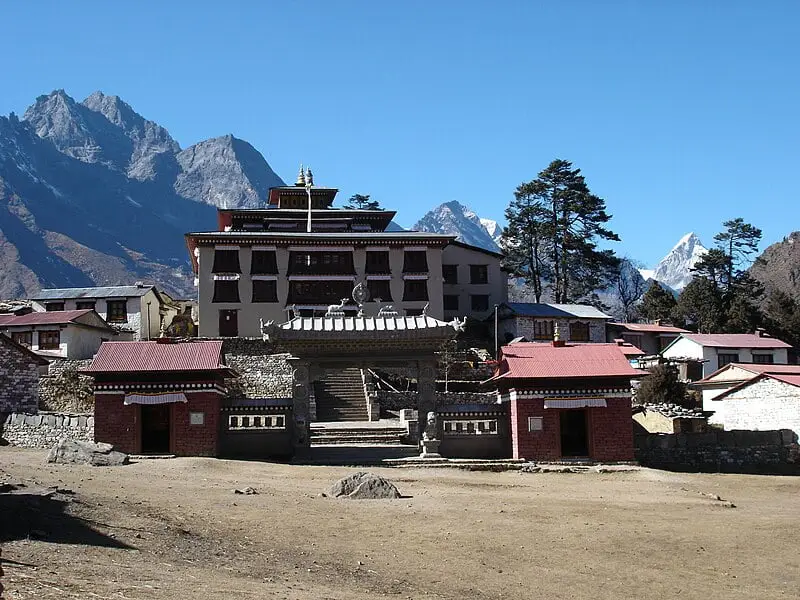
A beautiful, varied walking day through Leushyasa, Kyangjuma, and Phunki Tenga before the climb up to Tengboche, home to the Khumbu region’s largest monastery. If your timing lines up, the monastery holds a daily prayer ceremony around 3pm that’s open to visitors — a genuinely worthwhile stop after a 5–6 hour trekking day.
Day 7: Tengboche to Dingboche (3,867m → 4,410m)
The trail passes through Pangboche, Milingo, Deboche, and Somare on the way to Dingboche. This is usually the day trekkers start to feel the altitude in earnest — breathlessness on inclines that wouldn’t have registered a few days ago is normal here, not a warning sign on its own, but worth mentioning to your guide.
Day 8: Dingboche to Lobuche (4,410m → 4,940m)
A shorter but tougher day, roughly 5–6 hours over increasingly rocky, high-altitude terrain. The trail climbs along the lateral moraine of the Khumbu Glacier and passes Thukla, where a steep short climb leads to a hillside memorial for climbers who died on Everest — a quiet, sobering stop that puts the rest of the trek into perspective.
Day 9: Lobuche to Everest Base Camp via Gorak Shep (4,940m → 5,364m)
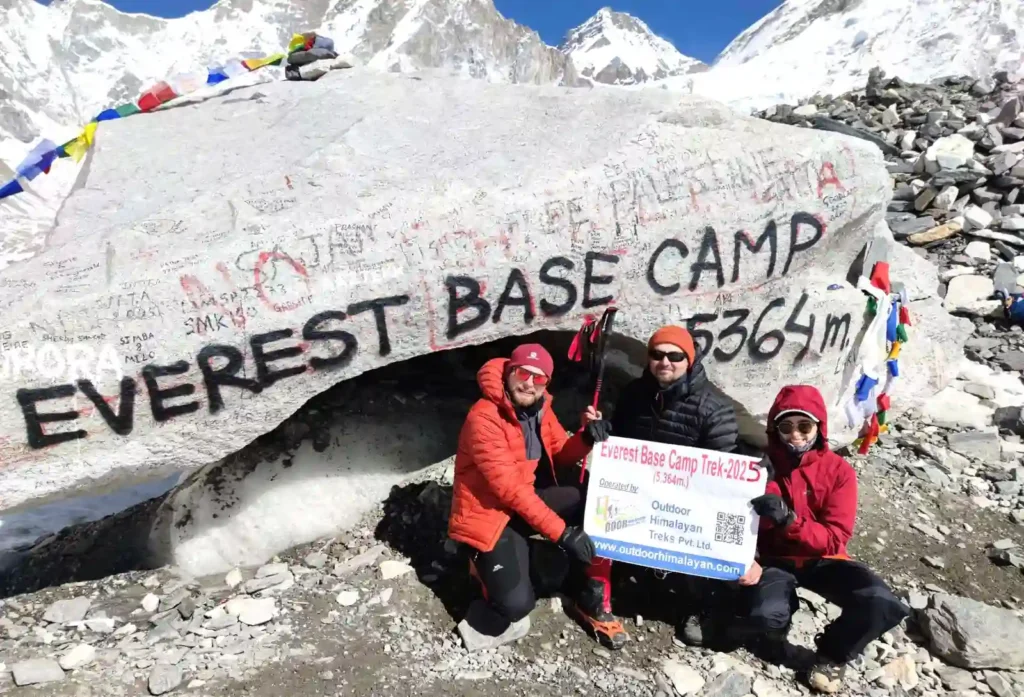
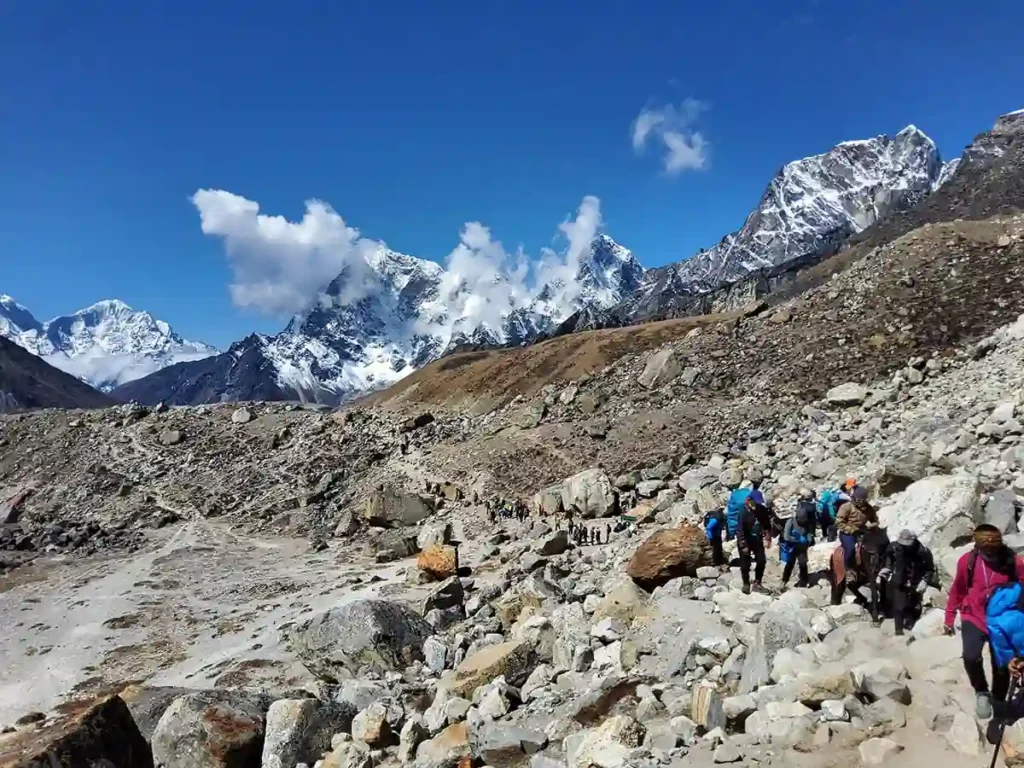
This is the longest and hardest day of the trek — 8–9 hours covering 11km, almost entirely above 5,000m. You’ll walk to Gorak Shep first, drop your main pack, then continue on to Everest Base Camp itself, crossing sections of the Khumbu Glacier moraine along the way. It’s worth knowing before you go: you can’t actually see Everest’s summit from Base Camp — it’s blocked by the surrounding peaks and the Khumbu Icefall. What you get instead is the base camp experience itself: prayer flags, glacier views, and the genuine sense of having walked to the foot of the world’s highest mountain. The real photo moment comes the next morning.
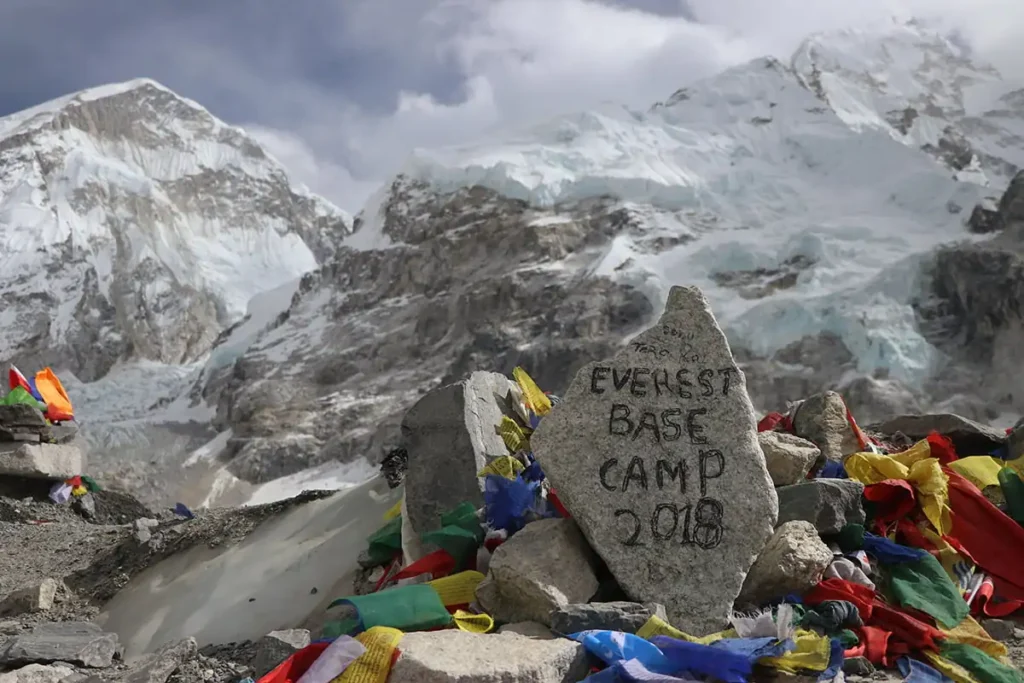
Day 10: Kala Patthar Sunrise, Descend to Pheriche (5,644.5m → 4,371m)
An early start for the climb to Kala Patthar, at 5,644.5m the highest point of the entire trek — higher than Base Camp itself — and the actual spot for that classic, unobstructed sunrise view of Everest’s summit. After the climb down, the day continues with a long descent to Pheriche, a full 16km and 7–8 hours in total. It’s a big day, but a satisfying one — everything from here on is heading back down.
Day 11: Pheriche to Tengboche (4,371m → 3,867m)
A long walking day, 16.5km over about 7 hours, retracing your steps back through familiar villages. The lower altitude makes the walking noticeably easier than the days heading up.
Day 12: Tengboche to Namche Bazaar (3,867m → 3,440m)
A shorter, 5-hour day back into Namche. Most trekkers use the extra energy to enjoy the town properly this time round — a hot shower, real coffee, and a good night’s sleep before the final push to Lukla.
Day 13: Namche to Lukla (3,440m → 2,860m)
The final trekking day, and longer than most people expect — 19km, 7–8 hours. The trail retraces your Day 3 and Day 4 route in reverse. Down to the Hillary Bridge, back through Jorsale and Monjo, past Phakding, and finally the last uphill push into Lukla.
That last uphill is short but demoralising after a full day of walking. Warn your legs.
Most groups have a small celebration dinner in Lukla — the guides, porters, and trekkers together. It’s genuinely one of the best evenings of the trip.
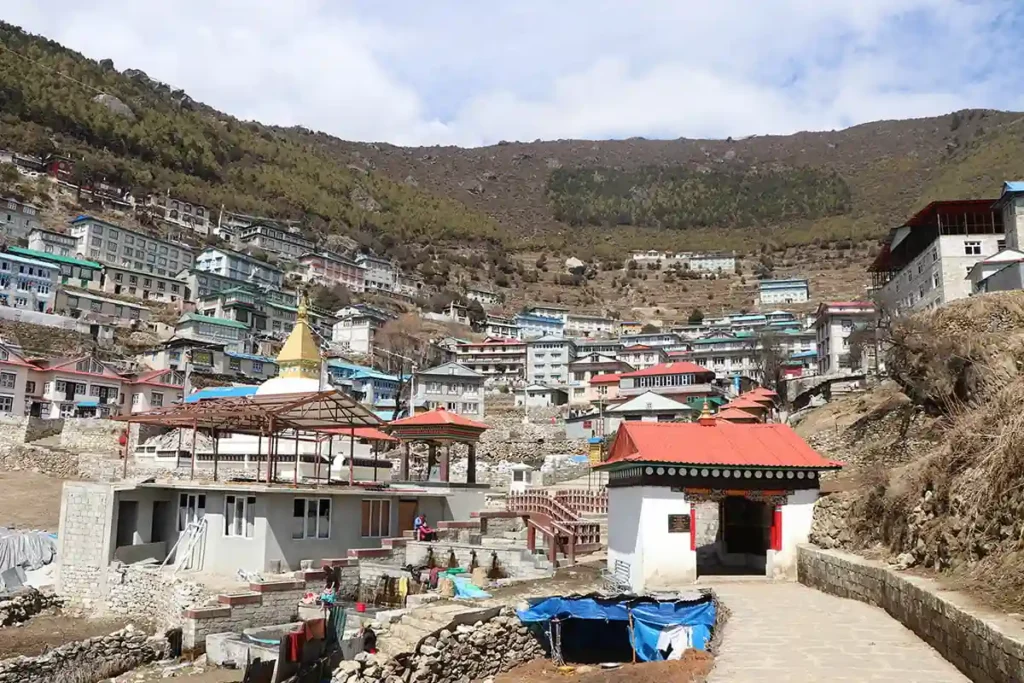
Day 14: Fly Lukla to Kathmandu (2,860m → 1,400m)
A short 45-minute flight back to Kathmandu. Worth knowing: Lukla flights are weather-dependent and delays are common, especially in peak season — most well-planned itineraries build in a buffer day around this stage for exactly that reason. If your international flight home is the same evening, you’re taking a real risk. Build a spare day in Kathmandu at the end. Every experienced trekker will tell you the same.
Day 15: Departure
Transfer to the airport for your onward flight, or extend your stay in Kathmandu if you’d like more time before heading home.
FAQ
How many hours do you trek each day?
On average, trekkers walk 4 to 8 hours per day depending on the day’s route and elevation gain, with early days being shorter and days closer to Base Camp becoming longer.
What is the hardest day of the trek?
Three days stand out. The long haul from Pheriche back down to Namche Bazaar is deceptively tiring. The push from Dingboche toward Gorak Shep tests you as the air thins out. And the combination of the Kala Patthar climb with the walk to Everest Base Camp and back is, for most people, the hardest single day of the entire trek.
What happens if my Lukla flight is delayed or cancelled?
It happens more often than people expect — Lukla flights are weather-dependent, and delays or cancellations aren’t rare, especially in peak season. Build a buffer day or two into your schedule around this stage of the trip. Most experienced trekkers treat it as standard planning, not a worst-case scenario.
Is there an alternative to flying to Lukla?
Yes. Trekkers who’d rather skip the flight can start from Jiri instead, reaching Lukla on foot via a few extra days on the trail. It’s a longer route — roughly 5 additional days — but it’s a real option if you want to see more of the region or avoid the flight altogether.
Do I need a guide for this itinerary?
Yes. A licensed guide is a legal requirement for foreign trekkers on the Everest Base Camp route. Beyond the requirement itself, a guide handles permits, monitors for altitude sickness symptoms, and manages the day-to-day logistics which matters more than it might seem once you’re several days into the trek.
Do I need supplemental oxygen for this trek?
No. A well-paced itinerary with proper acclimatization days is enough for the vast majority of trekkers. Guides typically carry Diamox as a preventive measure, and in the rare case of serious altitude sickness, the response is to descend — not to add oxygen.
Final Thoughts
That’s the full Everest Base Camp trek itinerary, day by day — 12 days of walking, two acclimatization days built in exactly where they need to be, and 15 days total once you count Kathmandu on either end. The route doesn’t change much year to year: Lukla, Phakding, Namche Bazaar, Tengboche, Dingboche, Lobuche, Gorak Shep, Everest Base Camp, and the sunrise climb to Kala Patthar before the long walk back down. What changes is how prepared you are for it.
If there’s one thing worth taking from this breakdown, it’s that the hard days are predictable. You now know which ones they are before you’ve booked a flight, which is more than most people get.
Ready to Walk This Route?
This is the exact itinerary our guided Everest Base Camp treks follow, with a full team handling permits, teahouse bookings, and your safety at altitude along the way. Take a look at our Everest Base Camp Trek page for pricing, dates, and everything included or contact us if you’d like a custom itinerary built around your dates and pace.
Updated On: 5 Aug 2026