Solo Trekking in Nepal 2026: Rules, Permits & Best Treks
5 Jun 2026 15 min to read
Can You Still Trek Solo in Nepal? (Short Answer)
Yes, you can still trek solo in Nepal in 2026. But it looks different from what it did a few years ago.
These days, heading out solo on Nepal’s well-known trails isn’t allowed anymore. Starting in April 2023, visitors must have an official guide beside them. That means true “solo” trekking; walking completely alone without any support, is against the rules. Most protected zones, including national parks, follow this new standard.
However, solo trekking in Nepal 2026 means something new: you can travel alone with a guide. You don’t need to join a group. You don’t need to find a trekking partner. You can book a guide just for yourself and trek at your own pace. You can see this from the official page of Nepal’s Department of Immigration.
The good news is that new rules from March 2026 make solo trekking even more accessible. Restricted Area Permits (RAP), previously required at least two trekkers, are now available to solo trekkers. Places once off-limits, like Upper Mustang, Manaslu, or Kanchenjunga, swing open doors to solo travelers with guides.
So yes, trekking alone in Nepal in 2026 is doable. You just need a guide. In fact, in many ways, solo trekking becomes simpler for trekkers, taking off a huge amount of stress regarding permits, easy accommodation, hence becoming a more pleasant experience.
The March 2026 Rule Change Every Solo Trekker Must Know
Until March 2026, the biggest obstacle for solo trekkers was a Restricted Area Permit (RAP). To obtain a RAP, a minimum of two people were needed. Treks like Upper Mustang, Manaslu, Kanchenjunga, Nar Phu, each demanded this, making it difficult for solo trekkers to travel there. Therefore, you needed to either find a partner or join a group in order to go on these treks.
As of March 22, 2026, this is no longer the case.
The Department of Immigration updated the new rule. There is no more the need for a second trekker to receive a Restricted Area permit (RAP) in case of a solo trekker. All across Nepal, restricted areas are included in this rule.
What this means for you:
| Before March 2026 | After March 2026 |
| Solo trekkers couldn’t get RAP | Solo trekkers can now get RAP |
| Required minimum 2 people per permit | No minimum requirement |
| Solo trekkers had to join groups | Solo trekkers can go alone with a guide |
Which treks does this rule affect:
- Upper Mustang Trek
- Manaslu Circuit (with or without Tsum Valley)
- Kanchenjunga Base Camp
- Nar Phu Valley
- Dolpo (Upper and Lower)
Important note: This doesn’t remove the guide requirement. You will still need a certified guide to travel in all the restricted areas and many national parks, but you are now allowed to travel solo with one guide. No more needing a tour group!
Back in April 2026, a talk with the Department of Immigration cleared everything up. Booking through us means your RAP forms get taken care of, so no extra steps on your part. This past spring, some solo hikers made their way across Manaslu and Upper Mustang using that updated rule, guided by our team.
2026 Guide Requirements (Trek by Trek)
Although you can trek those regions as a solo trekker, now you have to take a guide to most of them. We have broken down this part by region to help you understand the guide requirement better:
Guide Requirements (Strictly Enforced)
These treks require a licensed guide without any exceptions. This rule is set for these regions because there is a high chance of travelers getting into any difficulty that could hinder the trek or even be dangerous. Taking a licensed guide will minimize the risks as the guards are knowledgeable and experienced in those terrains. They know the challenges, how to prepare for them as well as what to do when trekkers face those challenges.
- Everest Base Camp (Sagarmatha National Park)
- Upper Mustang (Restricted Area)
- Manaslu Circuit (Restricted Area)
- Kanchenjunga Base Camp (Restricted Area)
- Nar Phu Valley (Restricted Area)
- Tsum Valley (Restricted Area)
Guide Recommended but Loosely Enforced
These treks technically require a guide, but enforcement varies. We still recommend one for safety and logistics.
- Annapurna Circuit
- Annapurna Base Camp
- Langtang Valley
- Ghorepani Poon Hill
Truly Solo Possible (No Guide Required)
There are only a few treks you can do without a guide. They are short, low-altitude, and outside protected areas.
- Kathmandu Valley Rim (walking day trips)
- Bandipur to Pokhara (village-to-village)
Bottom line for solo trekkers: For almost any trek you’ve heard of, plan on hiring a guide. The good news is you can be a party of one; no group required.
5 Best Treks for Solo Travelers in Nepal (Ranked by Solo-Friendliness)
Most paths aren’t built for solo travelers. A few offer better teahouses, easier routes, more social atmospheres, and clearer trails. Others are remote, isolated, and better suited for experienced solo trekkers only.
We have listed the best Nepal solo treks in 2026, ranked according to these four important factors that matter the most for solo trekking:
- Safety: Altitude, trail conditions, evacuation options
- Social atmosphere: How easy it is to meet other trekkers
- Logistics: Permits, transport, teahouse availability
- Overall solo-friendliness: How well the trek suits a solo traveler
- Here’s a table to help with quick comparison:
| Rank | Trek | Days | Difficulty (5-Easy, 5-Most Difficult) |
| 1 | Ghorepani Poon Hill | 4-5 | 1 |
| 2 | Annapurna Base Camp | 7-10 | 2 |
| 3 | Langtang Valley | 7-8 | 2 |
| 4 | Everest Base Camp | 12-14 | 3 |
| 5 | Manaslu Circuit | 14-16 | 4 |
#1 Ghorepani Poon Hill (4-5 days)
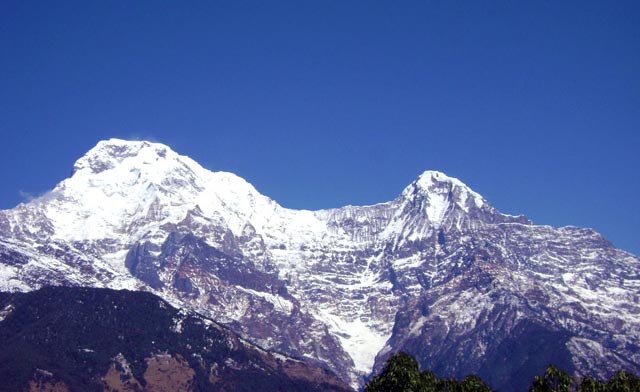
Going on a first solo trek? Ghorepani Poon Hill trek fits like an old shoe. At the low altitude of 3,210m, the air stays kind, meaning no altitude sickness risk. The paths stay clear, marked by footprints of other trekkers. Teahouses hum with other solo travelers and the logistics are simple: just a TIMS card and a bus ride from Pokhara. Many walk back with a steady calm, already eyeing bigger trails down the road.
#2 Annapurna Base Camp (7-10 days)
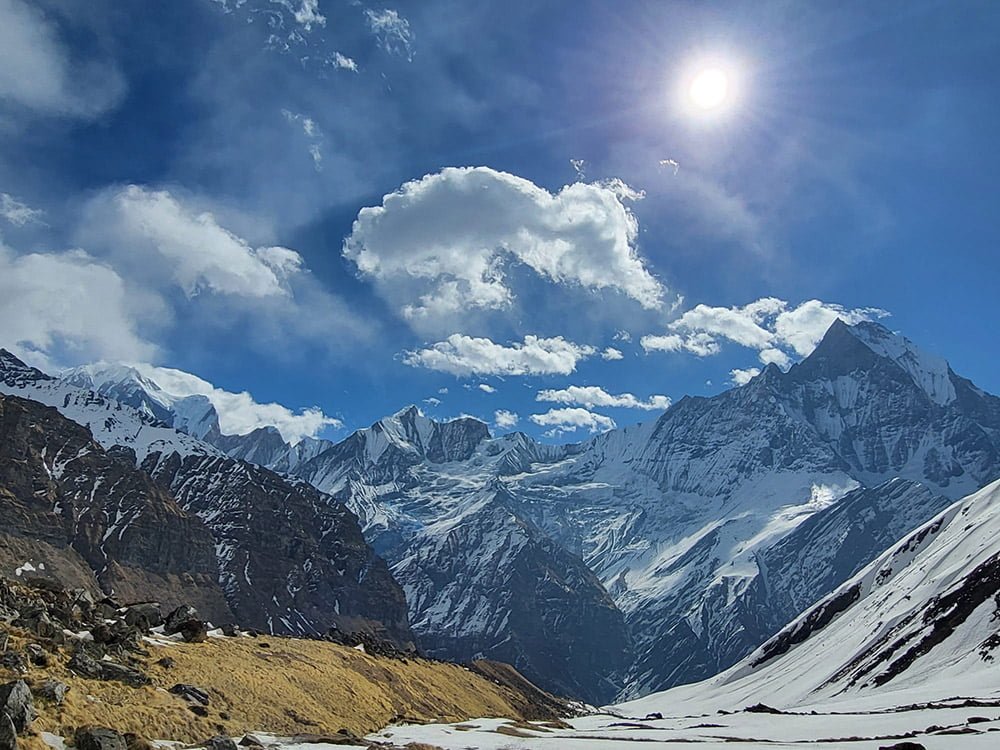
Perched at 4,130 meters, ABC climbs above Poon Hill yet remains within reach for independent hikers with some experience. While the trail is well-marked, cozy tea houses pop up often, offering warmth. You’ll need a guide technically, but enforcement is looser here than in Everest. Because of how it mixes effort with connection, our solo trekkers consistently name ABC as their top pick.
#3 Langtang Valley (7-8 days)
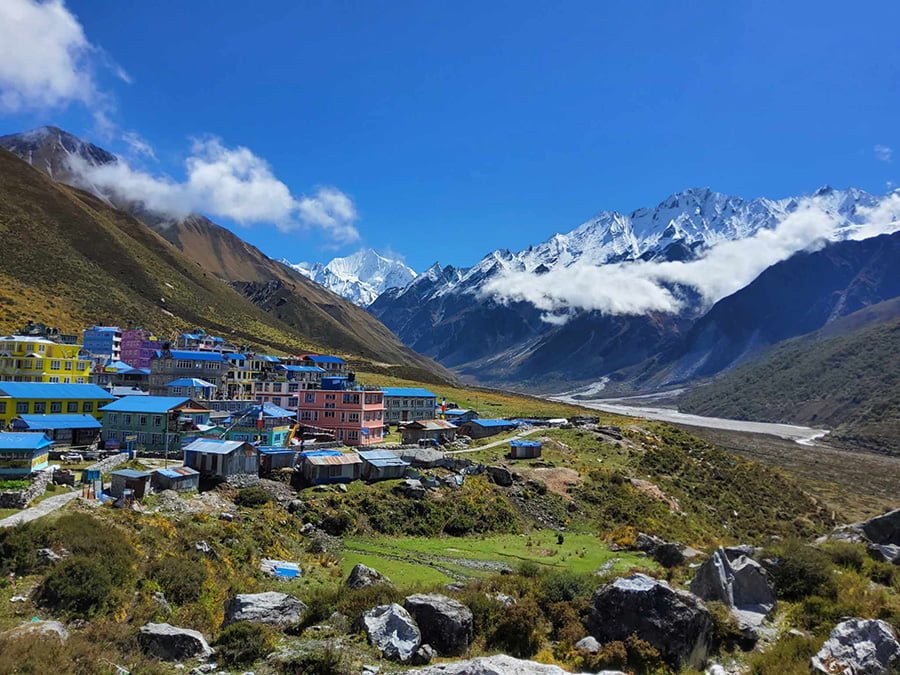
Quiet trails wind through Langtang Village, unlike the busier paths near ABC yet more secure than those on Manaslu. Since the valley stretches in one direction, following the route seems simple and natural. You’ll find comfortable teahouses there and reaching there just takes about 7 hours drive from Kathmandu. Social atmosphere is lower (rated 3/5) because there are fewer trekkers, though many solo travelers like that peace.
#4 Everest Base Camp (12-14 days)

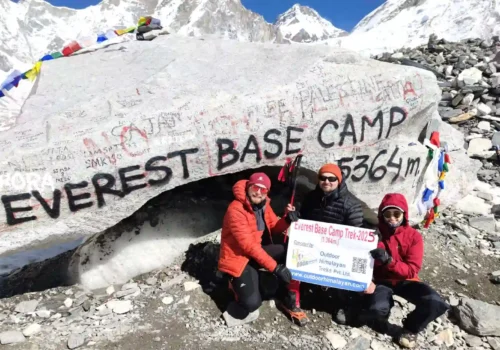
High up at 5,364m, EBC isn’t the best option for first-time solo trekkers. Though it is famous, it doesn’t mean it suits everyone. Here, a guide is strictly required. Because of high altitude and weather, delays happen often and the Lukla flight can be costly. That said, the social atmosphere is unbeatable; you’ll meet dozens of solo trekkers in Namche and Gorak Shep. This trek is suited to those who’ve trekked before with higher budgets.
#5 Manaslu Circuit (14-16 days) [with new solo RAP rule]

Manaslu is now open to solo trekkers thanks to the March 2026 rule change. But “possible” doesn’t mean “recommended” for most solo travelers. The trail is remote, Larkya La pass crosses 5,160m, and you’ll go days without seeing other trekkers. Only choose the Manaslu Circuit trek if you’ve already done EBC or ABC and want a genuine wilderness challenge.
Solo Trekking Safety: What You Need to Know
Safety is the most significant concern for solo trekkers, and we receive a very similar set of questions each and every week:
- “Is it safe to trek alone in Nepal?”
- “What if I get altitude sickness with no one around?”
- “How do I avoid scams or unsafe situations?”
- The honest answer is this: Nepal is an incredibly safe country for solo trekkers, however ‘safe’ doesn’t mean ‘without risk’.
The 2023 Guide Rule Actually Makes Solo Trekking Safer
Although this may sound counterintuitive, hear us out on this.
Before 2023, solo trekkers could walk completely alone on remote trails. When something went wrong, like altitude sickness, an accident, or simply losing the way, there was no backup. Every year, we hear stories of solo trekkers being evacuated, or sometimes even worse.
Since the guide rule took effect, solo trekking in Nepal 2026 means you’re never truly alone. Your guide is trained in:
- Understanding and treatment of altitude sickness emergencies.
- First Aid and rescue evacuation procedures
- Local languages, customs, and trail networks
- Arranging teahouse accommodations and trekking permit checks
- For solo trekkers, a guide isn’t a restriction. It’s a safety net.
Altitude Sickness: The Real Risk for Solo Trekkers
High up, your body might struggle regardless of who you’re with. It can affect anyone, no matter how strong they are, their age, or whether they’re experienced.
The danger for solo trekkers: Alone on the trail, there’s nobody checking your early symptoms. A headache might start small, then stick around longer than it should. Nausea can join in later, maybe along with loss of appetite. Before you even realize something is wrong, strength could already be slipping away too fast to descend.
The solution: This is where a guide is invaluable. Not only do they watch your oxygen levels every morning with a pulse oximeter, but they also track how well you slept, your appetite, and any concerning headaches. Their sharp eyes catch changes ahead of time, reacting to important changes accordingly.
If you insist on trekking truly solo (no guide):
- Understand the Lake Louise Score (LLS) for self-assessment of AMS
- Descend immediately if you have a headache, nausea, and anorexia.
- Do not “power through” early symptoms in the mountains.
- Carry Diamox (acetazolamide) after consulting your physician.
Solo Female Trekkers: What You Should Know
We have produced a guide specifically for independent female travelers and below is a brief summary of what to expect:
Nepal is a safe place for independent female travelers. The hotel and teahouse keepers, guides and local people are generally polite and welcoming. Dress modestly in towns and villages. Cover bare shoulders and knees around religious sites like monasteries and temples. Harassment is rare in Nepal but not impossible. Always trust your instincts.
Teahouse Safety and Solo Trekkers
Teahouses are central to Nepal’s trekking experience. For solo trekkers, they are your nightly community as well.
What to expect:
- You’ll share the common dining room with all other trekkers (this is also where solo travelers connect)
- Rooms are clean (but basic) with a lockable door (pack a small padlock if you want to increase security)
- Food is generally safe to eat (Dal Bhat will be your best bet)
- Hot showers may cost extra but they are worth it.
- Solo tip: Dine in the common room instead of your room. This is where solo trekkers meet each other and share trail information (and where some impromptu trek-pairs have formed).
Emergency Situations: What Solo Trekkers Need to Know
For minor issues (cold, blisters, stomach problems):
Basic first aid kits are available in all teahouses. Besides your guide will have a more complete one. If symptoms persist, descending is your best option.
For serious issues (altitude sickness, broken bone, chest infection):
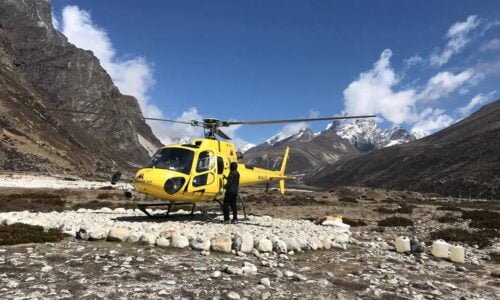
Your guide will be able to call for a helicopter evacuation. This can cost you between $5,000 and $10,000 if you don’t have insurance. Do not trek without travel insurance that covers helicopter rescue above 4,000m.
For solo trekkers with no guide: You are responsible for your own evacuation. Carry a satellite device (Garmin inReach or similar) and know your insurance policy’s emergency number.
Quick Safety Checklist for Solo Trekkers
Before you book your trek:
- Buy a travel insurance that includes helicopter evacuation (a minimum of $100,000 coverage)
- Have a medical examination with your doctor prior to your trek
- Talk to your doctor about Diamox
- Inform your family about your itinerary
- Book through a reputable trekking agency like Outdoor Himalayan Treks.
During your trek:
- Listen to the altitude instructions given by your guide.
- Drink and eat even if you don’t feel hungry or thirsty.
- Sleep no higher than the altitude reached at your highest point on that day
- If you have symptoms of moderate AMS, descend immediately.
FAQ: Solo Trekking in Nepal 2026
Can I trek solo in Nepal in 2026?
Yes, but “solo” has a new meaning. You can now trek by yourself, no need to find a partner. However, you must still be accompanied by a licensed guide through a registered agency. True independent trekking without a guide is no longer legal on most major routes.
What changed in the solo trekking rule in March 2026?
The Department of Immigration abolished the two-person minimum for Restricted Area Permits. Previously, you needed at least two trekkers to get a permit for places like Upper Mustang, Manaslu, and Kanchenjunga. Now, solo trekkers can apply alone. The guide requirement remains.
Do I need a guide for all treks?
On most popular treks like Everest Base Camp, Annapurna Circuit, Langtang Valley, and all restricted areas, yes, a licensed guide is required and enforced. Short day hikes near Kathmandu and Pokhara (Nagarkot, Sarangkot) are still possible without a guide.
What happens if I trek without a guide?
You risk fines up to NPR 12,000 (about $90), immediate removal from the trail, permit revocation, and potential denial of insurance claims if something goes wrong. Checkpoints along popular routes now verify permits and guide credentials.
Can I get a permit for restricted areas as a solo trekker?
Yes, as of March 2026. You can now apply for Restricted Area Permits for Upper Mustang, Manaslu, Tsum Valley, Nar Phu, Kanchenjunga, and Upper Dolpo as a solo traveler. However, you must book through a registered agency and hire a licensed guide.
Can I reduce costs as a solo trekker?
Yes. Join a group trek (you’ll be solo in the group), travel in shoulder season, or book early. Some agencies offer “group joining” where solo trekkers are paired with others on the same route, splitting guide costs.
Is solo trekking safe for women?
Nepal is considered one of the safest destinations for solo female trekkers. Harassment is rare, teahouse owners are protective, and female guides are available on request. Dress modestly in villages and use common sense.
What’s the best trek for first-time solo trekkers?
Langtang Valley would be the best trek for first-time solo trekkers as it is close to Kathmandu. It is well-marked, has good teahouses, and is less crowded than Everest or Annapurna. Perfect for beginners.
Do I need travel insurance for solo trekking?
Yes, and it’s now a practical requirement. Your policy must cover helicopter evacuation up to at least 5,500-6,000 meters. Without it, a rescue can cost $5,000-10,000 out of pocket. Checkpoints may ask for proof.
Can I trek to Everest Base Camp solo in 2026?
Yes, but with nuance. You can trek to EBC without joining a group, but you’ll need a guide or at least a porter to satisfy permit requirements. The Khumbu region has been slower to enforce the guide rule, but hiring a porter (who carries your pack) is a practical workaround.
Bottom Line: Solo Trekking in Nepal 2026 Is Different, But Better
Solo trekking in Nepal 2026 is not like five years ago. You can’t just show up with just a rucksack ready to hike off alone on secluded trails.
But here’s what will be possible:
- Trekking by yourself; no group, partner or stranger needed
- Hiring a private guide who works only for you
- Getting Restricted Area Permits as a solo trekker (new March 2026 rule)
- Experience the ultimate Himalayan experience with a licensed guide who knows altitude, trails, and emergencies.
Although the rules change, the experience, the real reason you want to trek solo in Nepal, is still here. Maybe better than ever.
Ready to Plan Your Solo Trek?
We have successfully guided many solo trekkers on routes from Poon Hill to Everest Base Camp. Here’s what we offer:
- Licensed, English-speaking guides with wilderness first aid training.
- All permits and paperwork (including new solo Restricted Area Permits)
- Teahouse and accommodation bookings
- Transport from Kathmandu to the trailhead and back
- 24/7 emergency backup
Not sure which trek fits you? Send us a message with how many days you have, your trekking experience (if any) and what you most want to see (mountains, culture, peace, social). We will recommend the right solo trek for you.
Just have a question? You can contact us to ask us anything about solo trekking in Nepal 2026. We will give you our honest answers from people who’ve been doing this for years.
Updated On: 5 Jun 2026