Nepal Floods 2026: Which Trekking Routes Are Affected and Which Are Still Open?
9 Sep 2026 12 min to read

Last updated: September 9, 2026
If you’ve seen the news or scrolled through social media over the past couple of weeks, you’ve probably come across footage of the flash flood that hit northern Nepal on August 26. It’s frightening to watch, and understandably, it has left a lot of people asking the same question:
Is trekking in Nepal still possible?
We tried to answer that truthfully rather than telling you that everything was okay because we are a trekking company. Things are not so straightforward.Devastating damages occurred in the flood in the areas around Bhote Koshi and Trishuli rivers, especially in the Rasuwa area and beyond. Roads, bridges, houses, and other facilities have been washed away, and the work of saving lives and restoring things is ongoing.
However, there is one crucial point: it does not mean that the trekking routes in Nepal have all been ruined by the floods.Trekking areas in Nepal cover a huge territory, and the situation in Langtang is completely different from the situation in Everest or Annapurna.There is a difference between the state of the trail itself and your ability to get to the trailhead now.
Thus, instead of stating that “Nepal is safe” or “Nepal is closed,” let’s try to analyze the situation in a little more detail.
What Happened
On the morning of August 26, an enormous chunk of ice and rock gave way in the upper Lhende Khola region near the Nepal–Tibet border. The result was a huge surge of water, rocks and debris flowing through the Bhote Koshi and Trishuli river basins.
The damage was devastating. Rasuwa suffered the most, but the flooding also affected Nuwakot, Dhading and the other regions downstream. Infrastructure was destroyed, and hydropower projects were severely damaged.Human casualties have also been severe, with more than 1,300 killed, with thousands more missing as of September 9, the scale of the disaster is difficult to comprehend. The Nepal government is still carrying out search and rescue operations in the affected districts, with extensive damage reported to roads, bridges and other infrastructure including hydropower tunnel areas where workers might be trapped.
We are not going to sugarcoat this as some regular monsoon flood incident. Communities have been devastated, and thousands of families are still searching for their loved ones.Our hearts go out to all those affected including local communities, guides, porters, lodge operators and their staff who have lost so much.
But for the trekkers who are looking for adventure, here is another important question:
Affected Trekking Routes: What was Actually Impacted?
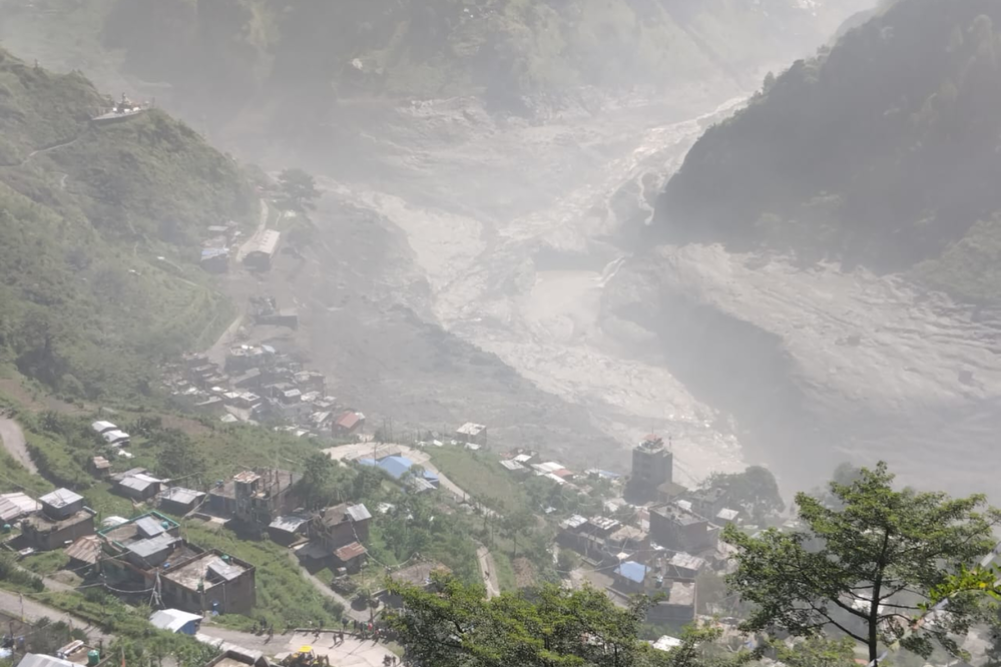
The immediate impact of the floods was limited to the Bhote Koshi, Trishuli section, mainly Rasuwa.
The Langtang region was directly impacted, especially in areas like Syabrubesi and other access points of the valley leading to Rasuwa. The access to the Langtang Valley from Dhunche through road and bridges near Syabrubesi has been blocked due to the floods.This implies that trekking routes in the Langtang region cannot be considered accessible just because there was once a valid trekking permit issued.
Langtang Valley
This is the region which calls for more precaution than the other regions.A considerable amount of damage has been done to the road and bridges on account of the flood before one reaches the trailhead of the Langtang Valley, making the route extremely difficult to follow.
However, what needs to be kept in mind is that just because there has been a huge flood in the region, the entire trekking route in the Langtang Valley has not been destroyed by the floods. The region of the upper Langtang Valley was not flooded like Syabrubesi. But for now trekking in this region isn’t permitted because risk of any landslide because of the flood . Therefore, authorities advise waiting until structural repairs are fully completed. If you had any proior plans to trek here soon, it is best to check official updates and reschedule.
Gosaikunda
Gosaikunda is also in the wider Rasuwa area, so this isn’t a route we’d tell people to simply turn up and start trekking without checking first. Some of the usual approaches have been affected by the wider damage to roads and infrastructure. The destination hasn’t been destroyed but the trail suggest it is not possible and suitable for now.
Tamang Heritage Trail
The Tamang Heritage Trail runs through the same wider Rasuwa area affected by the disaster.So again, the question isn’t simply whether the name of the trail appears on a list of “open” treks. The condition of the specific trail sections, bridges and access roads needs to be checked, which most of them have been destroyed.
Ruby Valley
Ruby Valley is another route where we would recommend checking current local conditions of travel method before travelling.The wider region has been affected by the disaster and the disruption to transport and infrastructure, but that doesn’t mean every kilometre of the Ruby Valley route has been destroyed.
The conditions may have changed rapidly since this incident happened and the information available on the Internet may not always be up-to-date. Should you plan an expedition in Nepal and have doubts regarding the current conditions of a certain route, please do not hesitate to get in touch with us through our contacts. We are in Nepal and can provide you with the current situation.
Road and Highway Access: It’s the One Thing That Often Goes Unmentioned
There’s one more element to this story that often gets overlooked by the media.A trekking trail in Nepal and a road in Nepal are two entirely different things.While the Annapurna trekking routes have not been affected by the floods in Rasuwa, the condition of the roads between Kathmandu and Pokhara is something to consider.
The Prithvi Highway has experienced some disruptions from road blockages and landslides in this region, especially in the Krishnabhir area.This means that while you might be able to take a look at a map, see where the Annapurna trail is located in relation to Rasuwa, and expect everything to be the same as before, that is not quite the case.
This is true for all trekking areas as well. It’s possible that the path itself is good to go but the journey to it whether by car, plane, road or bridge could be problematic.While traveling from Kathmandu to Pokhara, flying may turn out to be a better choice than going overland right now however, transport situation may change, and it is always better to find out more.
Thus, when the traveler asks, “Is my trek open?”, the actual question that needs to be answered is: “How are you getting to your trekking area?”
What About Trekking Permits?
Another thing people are understandably wondering about is whether trekking permits are still being issued.There has been no nationwide shutdown of trekking in Nepal because of the August 26 disaster. Trekking in regions outside the affected area is continuing, and permits for those destinations are still being handled through the normal system.
But there’s an important point here:
Having a trekking permit doesn’t mean the road to your trailhead is open.That’s particularly relevant for routes in the Rasuwa area.So if you already have your TIMS card or conservation-area permit, don’t take that as confirmation that everything on the ground is operating normally. Check the actual route and access conditions before you leave.
What about the other popular treks?
And no doubt, this must be the most frequently asked question:
“What about the other popular treks like Everest , Annapurna, Manaslu?”
The short answer is that they weren’t hit by the flood itself.
Everest Base Camp
First of all, the Everest region lies far away from the flooded Bhote Koshi–Trishuli corridor.
The disaster that happened on August 26th did not affect the route to the Everest Base Camp. For that reason, the major threat for trekkers here is still the weather and flights as well as the condition of the trail.
Annapurna
Trekking trails in Annapurna were also outside the flood-hit area.The major concern for travelers here is how to reach Pokhara? Overland transportation from Kathmandu can prove to be troublesome due to poor road conditions. Flying to Pokhara will be another option.
Manaslu
The Manaslu Circuit Trek was not directly affected by the flood that occurred on August 26th.It is a separate region and river system than the Rasuwa area. Nevertheless, it is a trekking journey through mountains, so the current weather and road conditions need to be assessed prior to travel.
Upper Mustang
Upper Mustang is also outside the direct flood-affected area.As with any trek, you’ll still want to check transport and local conditions before travelling, but there’s no reason to assume that Upper Mustang was destroyed because of the Rasuwa floods.
So if you’re booked for Everest, Annapurna, Manaslu or Upper Mustang, don’t panic and cancel your trek just because you’ve seen the flood footage online.Find out what is actually happening on your route first.
If You Have an Upcoming Booking
If You Have an Upcoming Reservation:
Booking on Langtang, Gosaikunda or Tamang Heritage Trek?
That’s when you would need to get in touch with your trekking operator first. There has been considerable destruction in the Rasuwa region and usual access has been hampered. It’s best that your trekking operator informs you about your options and what cannot be done. Safety should always remain your highest priority during any journey through these affected mountain paths. So better to change your destination.
Don’t just assume your original itinerary will work because your permit has already been issued.
Booked on Everest, Annapurna, Manaslu or Upper Mustang?
There’s no reason to assume your trek has been destroyed.
Your main concern is going to be the current transport situation and any normal seasonal issues affecting your route.
For Annapurna in particular, check how you’re getting from Kathmandu to Pokhara and whether flying makes more sense than travelling by road.
Still not sure?
Send your itinerary to your trekking operator and ask them to check the entire journey not just the trail Because “the trail is open” doesn’t tell you much if the road to the trailhead isn’t.
What Should You Actually Check Before Trekking?
If you’re planning to trek in Nepal soon, don’t make your decision based on one TikTok video, one Facebook post or one scary news headline.
Before you leave, check:
- Your specific trekking route
- The current condition of the road to the trailhead
- Domestic flight availability, if you’re flying
- Current weather and local conditions
- Trail and bridge conditions
- Any local restrictions
- Your operator’s latest information from the ground
And ask one simple question:
“If I left tomorrow, how exactly would I get to the trailhead?” That question is probably more useful right now than simply asking whether a trek is “open.”
How We’re Tracking This
This isn’t a situation that’s going to be completely settled in a few days.Search and rescue operations are still continuing, roads and bridges are being assessed, and access to some areas will change as repair and recovery work moves forward.So we’re not treating this article as something we publish once and forget about. We’ll keep checking the situation with our guides and ground teams and update this page when something important changes.
If a road opens, we’ll tell you.If a route becomes accessible again, we’ll tell you.And if something isn’t safe to attempt, we’ll tell you that too.
For a direct connection with outdoorhimalayn team, you can contact us through our page.
The Bottom line
The August 26 floods have been an overwhelming disaster, and the impact in Rasuwa and the Bhote Koshi-Trishuli corridor area has been very serious indeed.That does not mean, however, that Nepal’s trekking trails have been destroyed.
While the Langtang and other treks in the vicinity of the affected Rasuwa corridor require much closer scrutiny at this time, and are not advised to travel around, especially due to road damage, and the uncertainty of another flood. However The major trekking trails of Everest, Annapurna and Manaslu regions have not been affected and are still accessible, even if reaching the start point requires a bit of planning.
Therefore, if you plan to go on a trek to Nepal at the moment, the question you should be asking is not:
“Is the trail open?”
The question to ask is:
“Is the trail open and how do I reach it?”
That is the reality of the matter.
If you are still uncertain about your trek, feel free to contact us. We are happy to discuss your route and give you an assessment, regardless of booking with us.
FAQ
Is trekking in Nepal still possible after the 2026 floods?
Yes, but it depends heavily on the trekking region. Some areas directly affected by the floods remain closed or restricted, while other major trekking regions were outside the affected area.
Is Langtang Trek open after the floods?
No Langtang and its access routes have been seriously affected by the Rasuwa floods and should not currently be treated as a normal trekking destination.
Can I trek to Gosaikunda right now?
Access to Gosaikunda is affected by the disruption in the Rasuwa/Dhunche corridor, so trekkers should not assume the route is currently available.
Is Ruby Valley Trek affected by the floods?
The Ruby Valley trekking area was not directly hit in the same way as the Rasuwa/Langtang corridor, but access conditions can be affected by road damage and the condition of the approach routes.
Are Everest and Annapurna treks affected by the floods?
The August 26 flood was concentrated in the Rasuwa/Bhote Koshi–Trishuli corridor, so Everest and Annapurna are not directly affected by that particular disaster. However, access and weather conditions should still be checked before travelling.
Updated On: 9 Sep 2026