Hidden Treks in Nepal Ranked: Scenery, Crowds, Cost & Difficulty Compared
21 May 2026 19 min to read

The post compares eight lesser-known treks in Nepal by duration, difficulty, cost, altitude, scenery, and crowd levels. It groups them by beginner, experienced, and expert suitability, with notes on permits, seasons, and trekking logistics.
It highlights beginner-friendly options such as Pikey Peak, Sikles, and Tamang Heritage Trail, and more demanding routes including Upper Mustang, Langtang Gosaikunda, Manaslu Tsum Valley, Three Passes, and Kanchenjunga Base Camp. A final guide helps readers choose a trek based on time, altitude experience, and priorities.
How to Use This Comparison (30-Second Guide)
Trekking to the heights like the Everest is a feat for most. But for others, going to the Himalayas means being surrounded by the peace and tranquility of the environment while enjoying the stunning views of grandiose mountains covered in white. For them, going where they’re not stepping over other trekkers at every viewpoint or fighting for a teahouse bed at high altitude matters. If you’re one of those people, we have written this one just for you!
With a variety of hidden treks in Nepal to choose from, it can get really hard to decide which one actually fits your time, budget, and experience level. Don’t worry, that’s where we’re come in.
We’ve guided many trekkers across Nepal, including the routes you’ll read about here. Based on what we’ve seen and what our trekkers tell us afterward, we have ranked these hidden treks by scenery, crowd levels, cost, and difficulty.
Before you dive in, answer these three quick questions:
- How many days do you have?
- What’s your priority?
- Have you trekked above 4,000 meters before? (yes / no)
- Keep those answers in mind. Use the comparison table below to see your options side by side. Then jump to the section that matches your experience level.
- Let’s get started.
At a Glance: Quick Comparison Table
| Trek | Best For | Days | Difficulty | Est. Cost (Guide+Permits) | Max Altitude (m) | Crowd Level (1=Empty, 5=EBC) | Scenery (1-5) |
| Pikey Peak | Beginners, short time, Everest views without Lukla flight | 5-6 | Easy | $400-600 | 4,065 | 2 | 4 |
| Sikles Trek | Cultural trek with rhododendron & Annapurna views | 6-9 | Easy | $400-600 | 2,200 | 2 | 3 |
| Tamang Heritage Trail | Cultural immersion, hot springs, mountain views | 7-10 | Easy-Moderate | $500-700 | 3,228 | 2 | 3 |
| Upper Mustang | Culture, desert landscapes, no high passes | 10 | Moderate | $1,800-2,500 | 4,320 | 2 | 4 |
| Langtang Gosaikunda | High-altitude sacred lake, spiritual pilgrimage site | 14-16 | Challenging | $700-900 | 4,610m | 2 | 4 |
| Manaslu Tsum Valley | Culture + scenery combined | 18 | Challenging | $1,500-2,000 | 5,106 | 2 | 5 |
| Everest Three Passes | Experts, Everest views, serious challenge | 15 | Hard | $1,500-2,000 | 5,644.5 | 3 | 5 |
| Kanchenjunga Base Camp | Remote wilderness, fewest crowds | 17 | Challenging | $1,500-2,000 | 5,143 | 1 | 5 |
Crowd levels are estimated from our guides’ observations during peak seasons (March-May and September-November). Cost estimates are per person for the teahouse trek with a guide, not including international flights or tips.
The 3 Best Hidden Treks for Beginners
If you’ve never trekked above 4,000 meters or you’re short on time, start here. These hidden trails offer huge mountain scenery minus the dangers of high altitude or the crowds of Everest Base Camp.
Out of many trekking spots in Nepal that can be called hidden beauty and these three are our top picks for actual beginners. Easy to moderate in difficulty and not requiring previous experience, these are the 3 trails with 95% satisfaction rate based on our pork-trek surveys.
Pikey Peak (6 days, Easy)
Best for: First-timers who want Everest views without flying to Lukla
Hidden away, Pikey Peak stands out as our top pick for those just starting out. Its elevation of 4,065 meters makes it feel like a real Himalayan trek but low enough that altitude sickness is rare for healthy trekkers.
Another special thing about this trek is that it has earned praise from Sir Edmund Hillary himself as his favorite Everest viewpoint. On a clear morning, you’ll see Everest, Numbur, and a wall of eastern Himalayan peaks, with maybe some other trekkers but not too many to make it crowded.
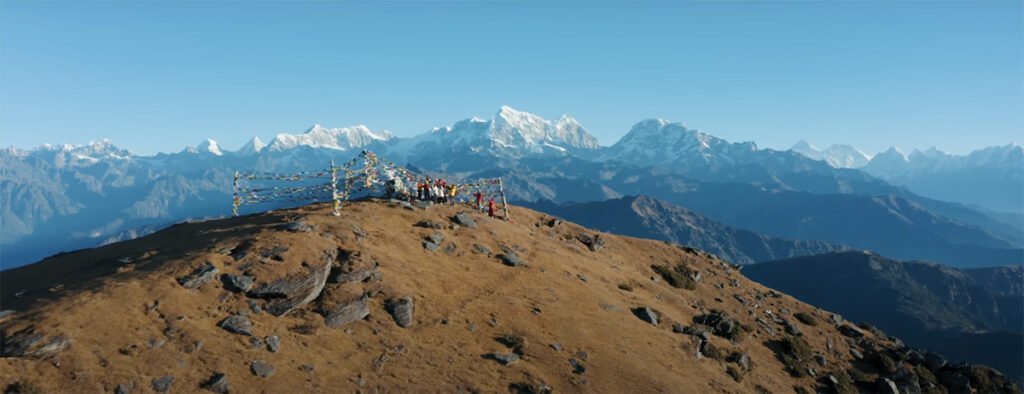
Why beginners love it:
- No Lukla flight is required (start by driving from Kathmandu)
- 6 days total, only 3-4 hours of walking per day
- Teahouses are basic but comfortable
- Our guides report that less than 5% of trekkers experience any altitude symptoms here
Permits needed: Khumbu Pasang Lhamu Rural Municipality Permit, Sagarmatha National Park Entry, TIMS
Best season: March-May and October-November
Sikles Trek (6-7 days, Easy)
Best for: Beginners who want Gurung village culture and rhododendron forests without high altitude
Our Sikles Trek follows a route through traditional Gurung settlements from Bijayapur Khola to Hemja. Though reaching near 2,500 meters, so the elevation rarely troubles travelers. You’ll walk through dense rhododendron forests (spectacular in March-April), stay in family-run teahouses, and wake up to views of the Annapurna range.
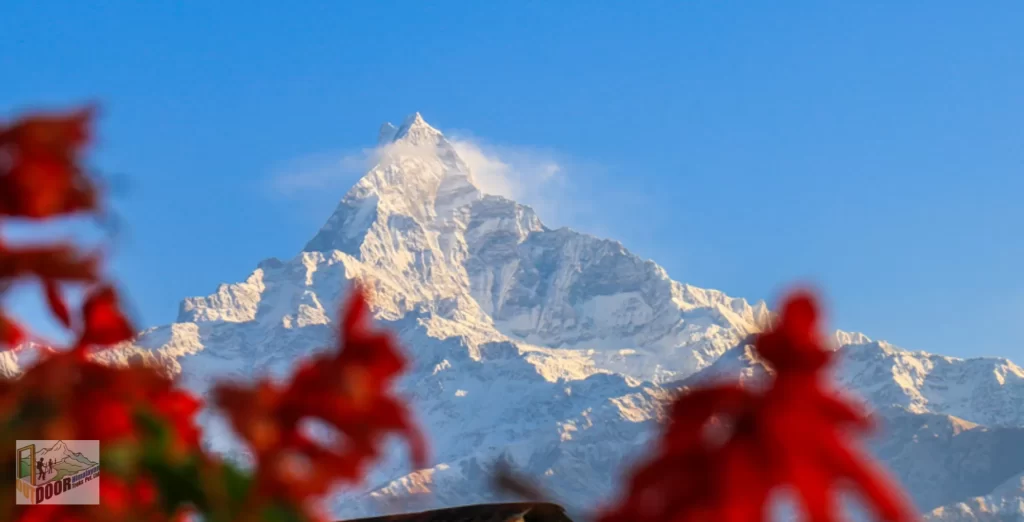
Why beginners love it:
- Max altitude 2,200m, so no altitude concerns
- Gurung villages with genuine homestay options
- Rhododendron blooms in spring are unforgettable
- Far fewer trekkers than the main Annapurna routes
Permits needed: Annapurna Conservation Area Permit and TIMS
Best season: March-April for rhododendrons, September-November for clear views
Tamang Heritage Trail (7-8 days, Easy)
Best for: Beginners who want culture, hot springs, and easy walking
Hidden behind Langtang National Park lies the Tamang Heritage Trail, rarely seen by the trekkers for the more famous Langtang Valley. This works in your favor, though leaving you with a quiet path with incredible scenery. The trail connects Tamang villages with stone houses, carved wooden windows, and friendly locals still wearing traditional dress.
The highlight of this trek is Tatopani (literally means “hot water”), a spot with natural springs to ease weary muscles after long stretches on foot. Reaching up to 3,500 meters, any healthy beginner will hardly be affected by the thinning air.
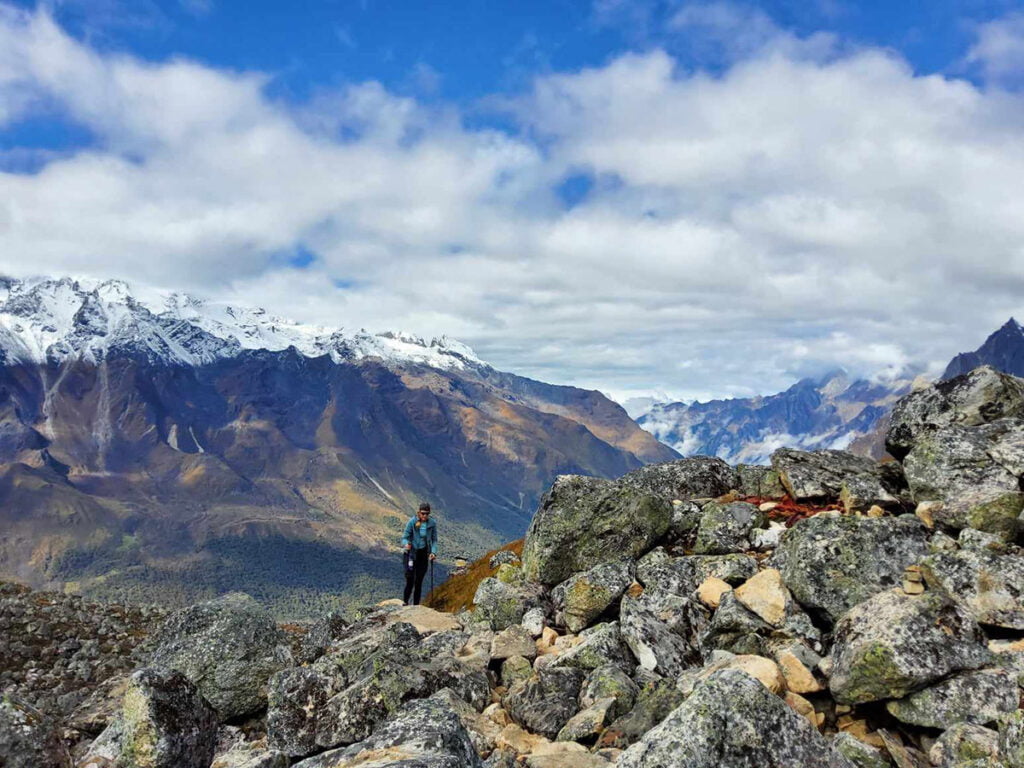
Why beginners love it:
- No flight needed (7-hour drive from Kathmandu)
- Hot springs at Tatopani
- Teahouses are simple but welcoming
- Our trekkers rate this as the most “culturally immersive” beginner trek
Permits needed: Langtang National Park Entry Permit, TIMS.
Best season: March-May and September-November.
The 3 Best Hidden Treks for Experienced Trekkers
If you have already experienced trekking in higher altitude, like Annapurna Circuit or even Everest Base Camp, then you’re familiar with the height and its environment. But now you want to experience a trek that is for your level but quieter and more remote.
These 3 hidden treks in Nepal are exactly that. They require previous high-altitude experience, proper fitness, and the right permits. The reward you get is authentic Tibetan Buddhist culture, untouched and closer Himalayan scenery, and a fraction of the crowds you saw on the main routes.
According to our post-trek surveys, experienced trekkers rate these three as the most rewarding hidden treks in Nepal, and also challenging.
Upper Mustang Trek (14 days, Moderate)
Best for: Trekkers who want Tibetan Buddhist culture, desert landscapes, and no altitude sickness
Upper Mustang is nothing like the rest of Nepal. The trail twists across a rain-shadow desert hidden behind mountains and eroded canyons. Houses painted bright white, following old Tibetan ways, fill the slopes. Dry air and crystal blue sky make you feel like you’re in another world. The culture being closer to Lhasa than Kathmandu doesn’t help.
What makes this an actual “hidden trek”? Back before 1992, outsiders couldn’t set foot in Upper Mustang, making it known as the “Forbidden Kingdom”. Even today, restricted area permits limit the number of trekkers. Chances are you’ll spot just one or two small crews along the way. Because of that, it feels untouched.
At 3,840m maximum, altitude sickness is rare here. But the terrain is rough, the days are long, and the costs add up fast here. Therefore, this cannot be considered a budget trek. Still, if you’re an experienced trekker who prefers culture over climbing, then it’s worth every rupee.
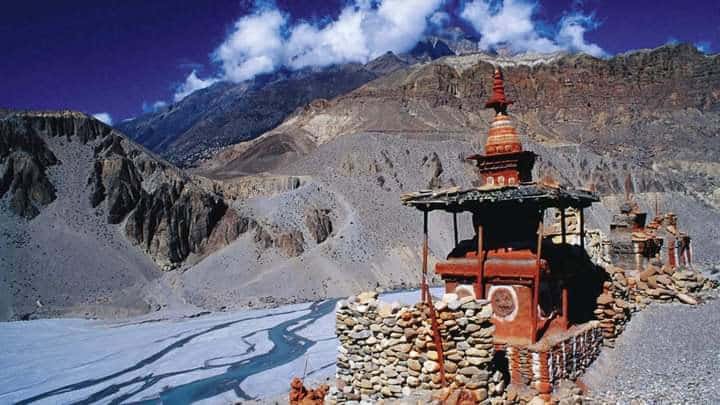
Why experienced trekkers love it:
- Completely different landscapes from Everest or Annapurna
- Lo Manthang’s walled city feels like stepping back in time
- Tiji Festival in May is spectacular (if you time it right)
Key stats:
- Max altitude: 4,320m (low for Nepal, but terrain is rough)
- Best season: March-November (longer season than most treks)
- Permits: Restricted area permit ($500 for 10 days) + Annapurna Conservation Area Permit, TIMS
- Teahouses: Basic but functional
Our data: In 2025, 100% of our Upper Mustang trekkers said they’d recommend while the most common complaint was “I wish I’d booked more days in Lo Manthang.”
Manaslu Circuit with Tsum Valley (20 days, Challenging)
Best for: Trekkers who want authentic Tibetan Buddhism and a high pass in one trip
The Manaslu Circuit is another less popular route that sees roughly 6,000 trekkers annually (about 30,000 less than EBC). Our guides still recommend it as the best all-around trek in Nepal for experienced trekkers. Plus Manaslu Tsum Valley trek adds another beautiful, hidden spot to this already good trek.
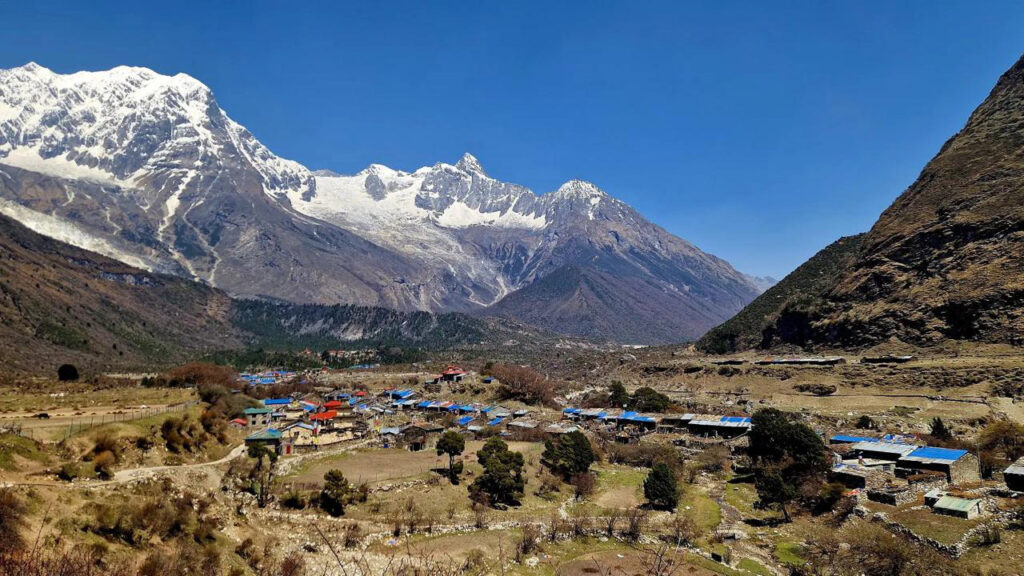
Here’s what many hikers overlook: add the Tsum Valley detour. Foreigners couldn’t enter here before 2008. Nestled high, this is a sacred Himalayan valley holding an ancient form of Tibetan Buddhism, unchanged by time. There’s Mu Gompa, standing since the 1000s, Rachen Nunnery, and villages where the houses are carved with Buddhist iconography that makes you feel like you’re in a movie.
Later on, past Tsum, the path links back to the Manaslu route before climbing over Larkya Pass, sitting high at 5,160 meters. You get a full view of Manaslu (8th highest mountain in the world), which hits hard in person. With a restricted permit, you’ll have to share the trail with only small groups instead of large crowds.
Why experienced trekkers love it:
- Tsum Valley alone is worth the trip (most trekkers skip it; don’t be like most trekkers)
- Larkya Pass is challenging but not technical
- Wildlife sightings (blue sheep, Himalayan tahr, possibly snow leopard)
- The teahouses are basic but the hospitality is genuine
Key stats:
- Max altitude: 5,160m (Larkya Pass)
- Best season: September-November (post-monsoon) and March-April (spring)
- Permits: Manaslu Restricted Permit + Manaslu Conservation Area Permit + Tsum Valley Restricted Area Permit + Chumnubri Rural Municipality Permit + ACAP +TIMS
- Teahouses: Basic to comfortable
Our data: The success rate for experienced trekkers (those with previous 4,000m + trekking) is 98%. For first-timers, it’s closer to 75%. This is not a beginner trek.
Langtang Gosaikunda Trek (14-16 days, Moderate)
Best for: Experienced trekkers who want high-altitude lakes, Himalayan views, and a spiritual element without the crowds of Everest or Annapurna
Langtang Valley gets attention. But most trekkers rarely go past Kyanjin Gompa. They miss the Gosaikunda extension, and that’s exactly why this detour still feels untouched.
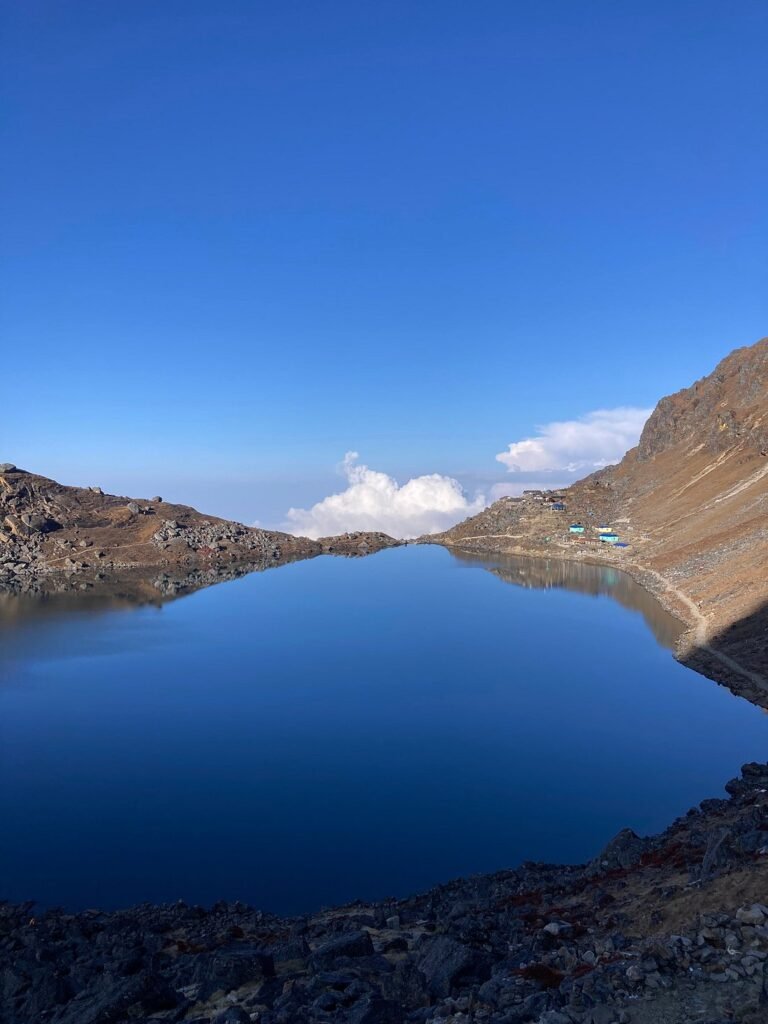
High up near the sky sits Gosaikunda, a sacred alpine lake at 4,610 meters. Hindus believed it was created by Lord Shiva. Every August, pilgrims hike here for the Janai Purnima. Outside that time, only a few travelers pass along the path.
The Langtang Gosaikunda trek starts like standard Langtang: through rhododendron forests, past waterfalls, and up to Kyanjin Gompa with views of Langtang Lirung. But instead of descending, you cross a quiet trail toward Lauribina Pass (4,610 meters). From the pass, Gosaikunda appears below you, a deep blue lake ringed by rocky peaks.
Why experienced trekkers love it:
- Gosaikunda itself is stunning and has real spiritual weight (you’ll see prayer flags, small shrines, and pilgrims if you time it right)
- The extension means you spend more days above 4,000 meters, a genuine fitness test
- Far fewer trekkers than the main Langtang Valley (most turn back at Kyanjin)
- You can combine with Helambu or the Tamang Heritage Trail for a longer loop
Key stats:
- Max altitude: 4,610 meters (Lauribina Pass and Gosaikunda)
- Best season: March-May and September-November. August is crowded with pilgrims (unique experience but busy).
- Permits: TIMS + Langtang National Park permit
- Teahouses: Basic but available all the way to Gosaikunda
What our guides say: “Most trekkers think Langtang is just the valley. The ones who go to Gosaikunda come back saying it was the highlight. The lake at sunrise is something you don’t forget.”
The 2 Most Challenging Hidden Treks (Experts Only)
These are not for everyone. If you’ve never trekked above 4,000 meters, stop here. These treks are for experienced high-altitude trekkers only; people who have already done multiple Himalayan treks and know how their body responds to thin air.
What’s behind the caution? High altitude marks both journeys, often spending several days past 5,000 meters. Remote trails, with limited evacuation options, and physical demands push fit trekkers to their limits.
If you’re one of those who want to face a real challenge without having to encounter large crowds, then these are for you. These treks in Nepal offer something almost no other routes can: genuine solitude, world-class mountain scenery, and the satisfaction of completing two of the hardest treks in the Himalayas.
Three Passes Trek (17 days, Hard)
Best for: Experts who want the ultimate Everest region challenge without the crowds of the main EBC trail
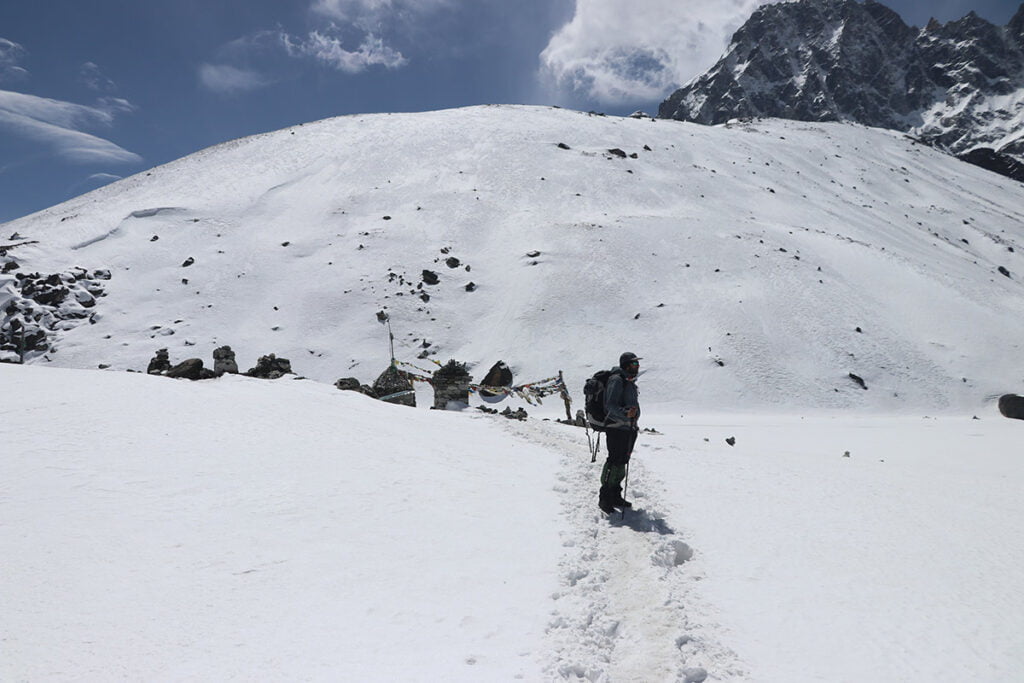
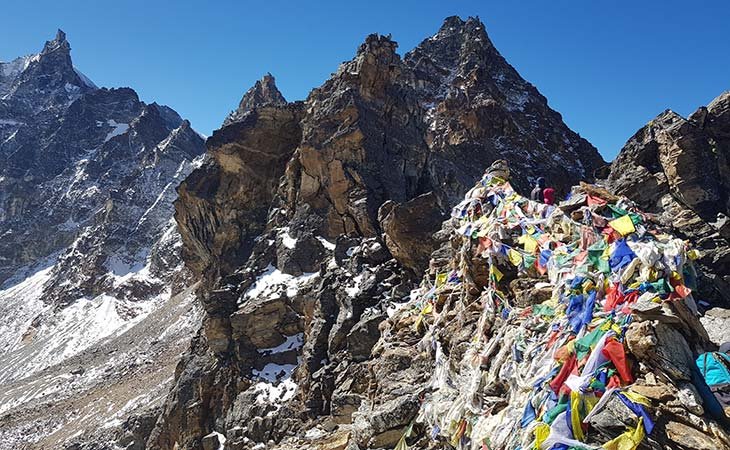
Most people head to Everest Base Camp. But fewer choose the Three Passes route instead. While the standard EBC route takes you straight up the main valley, you’ll be crossing Kongma La (5,535 meters), Cho La (5,420 meters) and Renjo La (5,360 meters) in this trek. These are three of the highest trekking passes in Nepal. In between these crossings, you’ll be visiting Gokyo Lakes, tucked into rocky basins and climbing Gokyo Ri for the classic Everest sunrise view. And you can still make it to the Base Camp if you want.
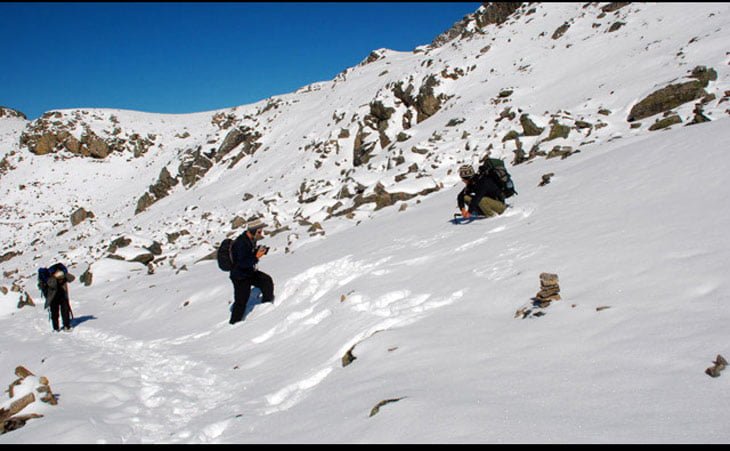
Here’s what makes this trek genuinely hard: you sleep above 4,400 meters for nearly 10 consecutive nights. When the air thins, it’s not only walking that gets harder. Nights turn restless, killing your appetite and slowly draining your energy in the process over the two weeks. Even those who are experienced feel this one.
Why experts love it:
- The passes are spectacular, Kongma La in particular feels like a true Himalayan crossing
- You see Everest from angles that 95% of trekkers miss
- Crowds thin out dramatically once you leave the main EBC trail
- Gokyo Ri sunrise is better than Kala Patthar (and far less crowded)
Key stats:
- Max altitude: 5,535 meters (Kongma La)
- Days above 5,000m: 3-4 (pass days)
- Consecutive nights above 4,400m: 8-10
- Best season: September-November and March-May
- Permits: TIMS + Sagarmatha National Park permit (guide mandatory post 2023)
- Teahouses: Basic to comfortable in the main valley, very basic in the pass sections
What our guides say: “Fitness matters, but experience matters more. If you haven’t slept at 4,500 meters before, do EBC first. Then come back for this.”
Our data: Trekkers with previous 5,000m+ experience have an 85% success rate on Three Passes. Trekkers whose highest previous trek was EBC (5,364m but only one day) have a 65% success rate. The difference is experience, more than fitness.
Kanchanjunga Base Camp Trek (16 days, Challenging)
Best for: Experts who want true wilderness, almost no other trekkers, and the world’s third highest mountain
Kanchanjunga is different.
It’s not because it is tougher than Three Passes, it’s not. What makes it different is its remoteness. Way out east in Nepal, it takes a whole day of driving from Kathmandu to Bhadrapur, then more driving, and then days of walking before you even see the mountain.
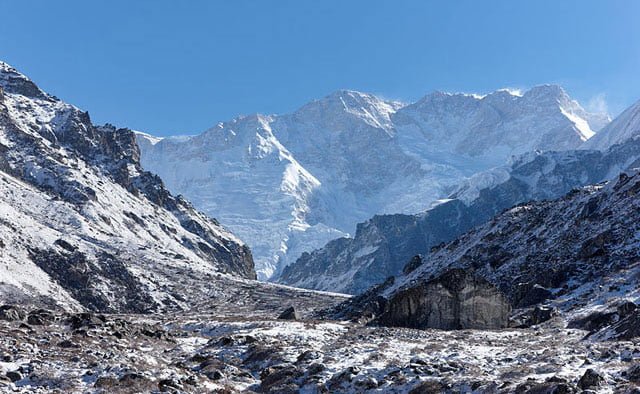
The Kanchenjunga Base Camp trek itself takes you through Kanchenjunga Conservation Area, where red pandas slip between trees, snow leopards move across high slopes, while Himalayan black bears roam below. You’ll cross moraines, walk alongside glaciers, and eventually stand at the base of Kanchenjunga (8,586 meters); the third highest mountain on Earth.
Here’s the thing though. Teahouses aren’t as built up compared to Everest or Annapurna routes. Camping comes into play on certain stretches. The trail is less maintained. This is not a trek for someone who wants hot showers and Wi-Fi.
Why experts love it:
- The solitude is genuine; not “less crowded” but actually empty
- Kanchenjunga itself is a perfect pyramid of ice and rock
- Wildlife sightings are possible (red pandas in particular)
- You feel like an explorer, not a tourist
Key stats:
- Max altitude: Approximately 5,150 meters (Base Camp)
- Annual trekkers: Fewer than 1,000
- Best season: October-November (post-monsoon) and March-April (spring)
- Permits: Kanchenjunga Restricted Permit + TIMS (guide mandatory)
- Accommodation: Teahouses + camping (mixed)
What our guides say: “Most trekkers who come to us for Kanchenjunga have already done EBC, Annapurna Circuit, and Manaslu. They’re looking for the next level. This is it.”
Our data: 95% of our Kanchenjunga trekkers rate it as “more rewarding than EBC.” 100% rate it as “harder to access.”
Which Hidden Trek Is Right for You?
Not sure which trek fits you best? These four questions from before will help you here.
Start Here
Q1: How many days do you have for trekking (excluding arrival/departure from Nepal)?
| If you have… | Go to… |
| 5-10 days | Beginner Treks (Pikey Peak, Sikles or Tamang Heritage) |
| 10-16 days | Experienced Treks (Upper Mustang or Langtang Gosaikunda) |
| 16+ days | Challenging Treks (Manaslu Tsum, Kanchenjunga, or Three Passes) |
Path 1: You have 4-7 days
Q2: What’s your priority?
| If you want… | Pick this trek |
| Everest views without flying to Lukla | Pikey Peak |
| The shortest possible trek (6-9 days) with Gurung village culture | Sikles Trek |
| Hot springs, community homestays, and cultural immersion | Tamang Heritage Trail |
Beginner verdict: All three are excellent for first-timers. If you want mountain views, choose Pikey Peak. If you want culture over views, choose Tamang Heritage. If you want the lowest altitude (no AMS risk), choose Sikles.
Path 2: You have 8-13 days
Q2: Have you trekked above 4,000 meters before?
| If no | Choose Upper Mustang (max 3,840m- safer for altitude) |
| If yes | Continue to Q3 |
Q3: What sounds more appealing?
| If you want… | Pick this trek |
| Tibetan Buddhist culture, desert landscapes, and no high passes | Upper Mustang |
| A high-altitude sacred lake (4,610m) with fewer crowds than main Langtang | Langtang Gosaikunda |
Experienced verdict: Upper Mustang is better for culture lovers and those worried about altitude. Langtang Gosaikunda is better for trekkers who want to test themselves at 4,600m without committing to a full high-pass trek.
Path 3: You have 14+ days
Q2: How many high-altitude treks (above 4,500m) have you completed?
| If 0-1 | Choose Manaslu Tsum Valley (challenging but achievable with experience) |
| If 2+ | Continue to Q3 |
Q3: What’s your priority?
| If you want… | Pick this trek |
| Authentic Tibetan Buddhism + a 5,160 pass (Larkya) | Manaslu Tsum Valley |
| True wilderness, almost no other trekkers, and the world’s 3rd highest mountain | Kanchenjunga Base Camp |
| The ultimate Everest region challenge with three passes above 5,300m | Three Passes Trek |
Expert verdict:
- Manaslu Tsum is the best all-around trek: culture, scenery, and a challenging pass.
- Kanchenjunga is for solitude seekers who don’t mind camping and remote trails.
- Three Passes is for peak-baggers who want the hardest physical challenge in the Everest region.
If you’re still unsure, use this shortcut:
| Your #1 priority | Pick this trek |
| Easiest / Shortest | Sikles Trek (6-9 days, max 2,200m) |
| Best Everest views without crowds | Pikey Peak (6 days) or Three Passes (15 days) |
| Best Tibetan Buddhist culture | Upper Mustang (10 days) or Manaslu Tsum (18 days) |
| Fewest crowds (genuinely empty) | Kanchenjunga Base Camp (fewer than 1,000 trekkers/year) |
| High pass challenge (5,000m+) | Manaslu Tsum (5,160m) or Three Passes (5,644m) |
| Sacred / spiritual experience | Langtang Gosaikunda (Hindu pilgrimage lake) |
| Hot springs + homestay culture | Tamang Heritage Trail (Tatopani hot springs) |
| No altitude sickness risk | Sikles Trek (2,200m max) |
FAQ: Hidden Treks in Nepal
Are these treks truly less crowded than EBC?
Yes, significantly. Everest Base Camp sees over 35,000 trekkers annually. On a peak season day, you might pass 200-300 people.
“Less crowded” means it is not empty, but nowhere near EBC levels.
Do I need a guide for hidden treks?
Yes for most, no for a few; but the rules have changed.
As of April 2023, Nepal requires all foreign trekkers to hire a licensed guide for trekking in protected areas. In practice, enforcement varies by region.
| Trek | Guide Required? | Notes |
| Pikey Peak | Technically yes, but loosely enforced | You can attempt solo, but we don’t recommend it. |
| Sikles Trek | Technically yes | ACAP area- some trekkers go solo |
| Tamang Heritage Trail | Technically yes | Langtang region; enforcement is moderate |
| Upper Mustang | Yes, strictly | Restricted area permit requires a guide |
| Langtang Gosaikunda | Technically yes | National park rules apply |
| Manaslu Tsum Valley | Yes, strictly | Restricted area permit requires a guide |
| Kanchenjunga Base Camp | Yes, strictly | Restricted area permit requires a guide |
| Three Passes | Yes, strictly | Sagarmatha National Park enforces this |
Even where enforcement is loose, we strongly recommend a guide for hidden treks. Trails are less marked, teahouses are fewer, and evacuation options are limited. A guide isn’t just a rule; it’s a safety net.
What’s the best season for hidden treks?
Three Passes and Langtang Gosaikunda have the most comfortable teahouses. Kanchenjunga has the most basic (some camping). Tamang Heritage has well-maintained community lodges.
What’s the best season for hidden treks?
March-May and September-November are best for all. Upper Mustang is also trekable during monsoon (June-August) because it’s a rain shadow.
Can a beginner do any hidden treks?
Yes. Pikey Peak, Sikles Trek, and Tamang Heritage Trail are all beginner-friendly. Sikles has the lowest altitude (2,200m), so no altitude sickness risk.
Which hidden trek has the best mountain views?
Three Passes (Everest, Lhotse, Makalu), Manaslu Tsum (Manaslu), and Kanchenjunga (Kanchenjunga) all score 5/5. Upper Mustang has distant views only (3/5).
Can I combine two hidden treks?
Yes. Manaslu Tsum is already a combination. Others include ABC + Mardi Himal (12-13 days) or Langtang + Gosaikunda (14-16 days). Contact us for a custom itinerary.
How do I book a hidden trek?
You can contact us with your preferred trek, travel dates, and group size. We’ll respond within 24 hours with availability and a quote. We handle permits, guides, teahouses, and logistics.
Bottom Line + Packages
You came here looking for hidden treks in Nepal; less noise, thinner crowds, and a more authentic experience.
Now you have eight of them.
Choosing a trek depends on how much time you have, what fits your wallet, plus your experience level. Check the comparison table and flowchart: they’ll help sort through options. After that, we take care of everything else.
We take care of: Permits, licensed guides, teahouse bookings, ground transport, and emergency backup planning. You just show up and walk.
Ready to book or ask questions? Reach out with your preferred trek, travel dates, and group size. We’ll respond within 24 hours with availability and a custom quote.
Not sure which trek fits you best? Send us a quick message with how many days you have and what you’re looking for. We’ll recommend one that suits you the best.
Updated On: 11 Aug 2026