How much does trekking Cost in Nepal? (A realistic 2026 budget).
28 Jun 2026 16 min to read

Trekking costs in Nepal vary widely by route, duration, comfort level, and whether travelers go guided or independent. Most trekkers spend about $30 to $150 per day, with expenses shaped by permits, guide and porter fees, accommodation, food, transport, and small on-trail extras.
The post breaks down typical costs for standard and restricted-area treks, outlines 2026 guide and porter rates, and compares package prices for routes such as Annapurna Base Camp, Everest Base Camp, and Manaslu Circuit. It emphasizes that Everest and restricted treks cost more, while shorter treks are usually more budget-friendly.
How much does trekking cost in Nepal? It is one of the first questions almost every trekker asks before planning a trip, and honestly, it is a fair one. Search online and you will find numbers all over the place — some blogs make Nepal trekking sound almost free, while others quote figures that feel completely out of reach. The truth sits somewhere in the middle.
The real trekking cost in Nepal depends on a few things most guides never properly explain. Your route, how long you trek, your comfort level, and whether you go guided or independent all play a part. A budget traveler doing a short Langtang trek will spend very differently from someone on a full Everest Base Camp package. So explaining how much does trekking cost in Nepal can be challenging.
This guide breaks down every real expense honestly — permits, guides, porters, food, accommodation, transport, and the hidden costs that catch most first-time trekkers off guard.
Most trekkers spend between $30 and $150 per day in Nepal, depending on the route, travel style, and level of support. Here is what actually drives that difference.
What Affects Trekking Cost in Nepal?
Trekking cost in Nepal does not have one fixed price because several factors change the total cost. The biggest ones are the trek route, trek duration, season, travel style, and whether you choose a budget, standard, or luxury experience.
Trekking Route
This will be the one factor which influences the cost of your trip more than anything else.
Everest Base Camp and Manaslu Circuit are popular hikes and naturally, cost more due to permits and the logistics involved being very costly as they require you to travel through some tough and far-off terrains where prices for everything including food and lodging increase.
Shorter or lower-altitude treks like Langtang Valley and Mardi Himal treks are cheaper options..
Trek duration
This one is simple yet overlooked by many.
One extra day spent trekking also implies one extra day of lodging costs, food expenses, cost of hiring guides and porters. The costs involved in 7 days trek and 14 days trek are not twice, rather in many cases they might even be more if the longer route involves higher and restricted zones. A trek like Langtang or Mardi Himal will usually be cheaper than Everest Base Camp, Manaslu Circuit, or Upper Mustang.
While planning, it is important to estimate how much trekking cost in Nepal per day and multiply that honestly
Trekking style
This is where personal preference becomes the most important factor.
Nepal really accommodates all sorts of trekkers:
- The budget option would be to have basic teahouse accommodation, simple meals, and maintain low expenditure.
- The standard option would be to have comfortable lodging, various food options, and an accompanied but not lavish trek.
- The luxury option would be to have luxurious lodges, individual guide, and high standards of comfort similar to those in hotels.
All of these options are right. However, recognizing the option you belong to automatically makes your Nepal trekking budgeting more precise even before stepping foot in Kathmandu.
Solo vs guided trek
This is an important distinction for 2026 specifically.
Nepal has moved toward making licensed guides mandatory on most major trekking routes. What this means practically is that the days of completely independent trekking across popular trails are becoming increasingly limited. For most people reading this, a guided trek is either required or strongly advisable.
That said, the cost difference between solo and guided is not always as large as people assume. When you factor in the cost of a guide in Nepal, the safety they provide, local knowledge, emergency support, and the logistics they handle a guided package from a local Nepal-based agency often works out comparable to or only marginally more than attempting to organize everything independently.
Now let’s look at the main trekking cost components one by one.Each components explained below
Nepal Trekking Permit Costs
Permits are a fixed and non-negotiable part of any Nepal trek. Every trekker needs them, they are checked at multiple points along the trail, and the cost varies depending on which type of route you are doing.
Rather than memorizing every individual fee, the simplest way to think about permits is in two categories.
Standard Permit Treks
Most popular Nepal treks fall into this category. This includes routes like Everest Base Camp, Annapurna Base Camp, Langtang Valley, and Ghorepani Poon Hill.
These treks typically require two permits:
- TIMS Card — a trekker registration and safety record
- National Park or Conservation Area Entry Permit — for the protected area your route passes through
When calculating how much trekking cost in Nepal, standard permits for these routes generally fall between $35 and $50
Restricted Area Treks
Some of Nepal’s most extraordinary destinations — Upper Mustang, Manaslu Circuit, Nar Phu Valley, and Upper Dolpo — sit inside government designated restricted zones.
These require an additional special permit on top of standard fees. Restricted area permits are considerably more expensive and can only be obtained through a licensed trekking agency — you cannot arrange them independently.
Budget anywhere from $100 to $500+ per person in additional permit costs depending on the specific restricted area and season and duration of trek.
Guide Costs in Nepal
Hiring a guide in Nepal is no longer just a recommendation — for most major trekking routes in 2026 it is a legal requirement.
Nepal’s government introduced mandatory licensed guide regulations across popular trekking areas to improve trekker safety and support local employment. What this means practically is that planning a trek without a guide on routes like Everest Base Camp, Annapurna, or Manaslu is no longer a viable option regardless of your experience level.
The more important question then is not whether you need a guide — but what kind of guide, and what it actually costs.
Types of Guides in Nepal
Not every guide is the same and the difference matters both for your experience and your budget.
Licensed Trekking Guide
The standard option for most treks. A government licensed guide handles navigation, communicates with teahouse owners, monitors your health at altitude, and manages day-to-day logistics on the trail. This is what most trekkers need.
Specialist or Head Guide
For technical treks, peak climbing, or larger groups a more experienced head guide may be assigned. These guides carry additional certifications and charge accordingly.
Local Area Guide
Some restricted area treks require a guide with specific local area knowledge on top of standard licensing. Upper Mustang for example has its own cultural and logistical nuances that make local expertise genuinely valuable rather than just a regulatory requirement.
How Much Does a Guide Cost in Nepal?
Guide fees in Nepal are generally charged as a daily rate and vary based on experience, trek type, and season.
| Guide Type | Daily Rate (2026 estimate) |
| Licensed Trekking Guide | $30– $50 per day |
| Specialist / Head Guide | $60 – $100per day |
| Local Area Guide | $35 – $60 per day |
Porter Costs in Nepal
If the guide is the most important person on your trek, the porter is the one who makes it actually enjoyable.
A porter carries your main bag — typically up to 20 to 25 kilograms — so that you walk the trail with only a light daypack.Many travelers are surprised at how much trekking cost in Nepal when they include porter fees On a long high altitude trek covering eight to ten hours of walking per day, that difference is not small. Most trekkers who hire a porter say afterwards they wish they had not even debated it.
Porter vs Porter-Guide — What Is the Difference?
This is one of the most common questions trekkers ask when planning their Nepal budget.
Porter
Carries your bag. Focuses entirely on keeping your load moving efficiently along the trail. Does not typically provide navigation or language support. Best option when you already have a licensed guide and need additional carrying support.
Porter-Guide
A combined role that handles both carrying and guiding responsibilities. More expensive than a standard porter but cheaper than hiring a separate guide and porter. Popular choice for shorter or moderate treks where the route is relatively straightforward and group sizes are smaller.
The honest advice is this — on longer or higher altitude treks like Everest Base Camp or Manaslu Circuit, separating the roles and having a dedicated guide alongside a porter is always the better arrangement. One person cannot do both jobs well at 5,000 metres.
How Much Does a Porter Cost in Nepal?
Like guides, porter fees are charged as a daily rate.
| Porter Type | Daily Rate (2026 estimate) |
| Standard Porter | $25– $35 per day |
| Porter-Guide | $35 – $50per day |
Accommodation Costs on the Trail
Teahouse accommodation in Nepal ranges from basic to surprisingly comfortable depending on the route, altitude, and season.
Basic Teahouses
Simple twin or dormitory rooms, shared bathrooms, and thin walls that do very little against the cold at altitude. On busy routes during peak season these rooms fill fast. They are functional, they are part of the experience, and they keep costs low.
Mid Range Lodges
More comfortable rooms, better mattresses, sometimes an attached bathroom, and heating in the common area. These are what most standard package trekkers stay in and they represent the sweet spot between comfort and cost on the trail.
Luxury Lodges
Available on select routes — most notably the Everest region through the Yeti Mountain Home and Similar Lodge chains and certain sections of the Annapurna Circuit. Private rooms, hot showers, decent WiFi, and a dining experience that genuinely surprises most trekkers expecting basic trail food.
| Accommodation Type | Cost Per Night (2026 estimate) |
| Basic Teahouse | $10 – $15 per person |
| Mid-Range Lodge | $15 – $35 per person |
| Luxury Lodge | $80 – $200+ per person |
Accommodation on most trekking trails in Nepal is usually in teahouses or lodges. These are often simple but comfortable enough for most trekkers.
Food and Drinks on the Trek
Food costs on a Nepal trek depend less on your room type and more on where you are trekking, how high you go, and what you choose to eat and drink. In lower trekking areas, meals are generally more affordable, but prices rise steadily as the trail becomes more remote and supplies have to be carried higher into the mountains.
In most teahouses, simple local meals like dal bhat are usually the best value, while western dishes, snacks, bottled water, soft drinks, and coffee tend to cost more. This is especially true on high-altitude routes like Everest Base Camp and other remote treks.
What Usually Affects Food Cost?
- Altitude – higher places usually mean higher menu prices
- Route – remote trails cost more than accessible ones
- Meal choice – local food is often cheaper than western food
- Package type – some trekking packages include meals, while drinks and snacks are extra
What Trekkers Often Forget
Even when meals are included in a trekking package, personal extras often are not. Things like tea, coffee, bottled water, soft drinks, chocolate bars, and snacks can quietly raise your total budget over several days.
A Simple Budgeting Rule
If your package includes meals, keep a separate small budget for drinks and personal snacks. If meals are not included, expect your daily food cost to rise as you gain altitude.
Transportation Costs
Transportation is one of the biggest reasons trekking prices vary so much in Nepal. Some routes begin with a simple road journey, while others need domestic flights or long jeep transfers into remote areas.
Treks in the Annapurna or Langtang regions are usually easier and cheaper to reach. But routes like Everest Base Camp often involve flights to Lukla, and remote treks such as Manaslu or Upper Mustang may require long private or shared jeep rides. In other words, the trek itself is only part of the cost — getting to the trailhead matters too.
If you are comparing trekking packages in Nepal, always check whether transport is included. A lower package price can sometimes look attractive until you realize flights, jeeps, or transfers are extra.
What Usually Changes the Transport Cost?
- Local bus – cheapest option, but slower and less comfortable
- Shared jeep – faster and more practical on rough roads
- Private jeep – more comfortable, but adds significantly to the cost
- Domestic flights – save time, but increase the total budget quickly
Why Everest Treks Cost More to Reach?
Everest region treks often cost more because of the Kathmandu to Lukla flight , which is one of the biggest transport expenses in Nepal trekking. That is why Everest Base Camp usually costs more than Annapurna or Langtang, even before you compare food and accommodation. SO yes your means of transport definitely makes a difference in cost of trekking.
Hidden Costs Travelers Forget
This is where many trekkers underestimate their budget.
Most people plan for permits, guides, meals, and accommodation — but the smaller daily expenses on the trail can add up surprisingly fast. These are not huge on their own, but over several days they can noticeably increase your total trekking cost in Nepal.
Common Extra Costs on the Trail
- Charging devices
- WiFi access
- Hot showers
- Laundry
- Snacks and drinks
- Tips for guides and porters
- Gear rental or last-minute gear purchases
Why These Small Costs Matter
A few dollars here and there may not seem important at first, but on a 10 to 14 day trek they can add up quickly. This is especially true at higher altitudes, where snacks, drinks, and basic services become more expensive.
A good rule is to keep a small extra budget for personal expenses rather than planning only around the package price.
What Popular Nepal Treks Actually Cost
By this point, you have seen what affects cost of trekking in Nepal — permits, guides, food, transport, and personal extras. But if you are planning a real trip, the most helpful thing is often seeing actual package examples.
Instead of giving vague averages, here are a few real trekking packages from Outdoor Himalayan Trek. These give you a much clearer idea of what different routes and service levels can cost.
The prices below are based on current Outdoor Himalayan trek listings and are meant to give you a realistic idea of what different routes and service levels can cost. Prices may change depending on season, group size, and package inclusions.
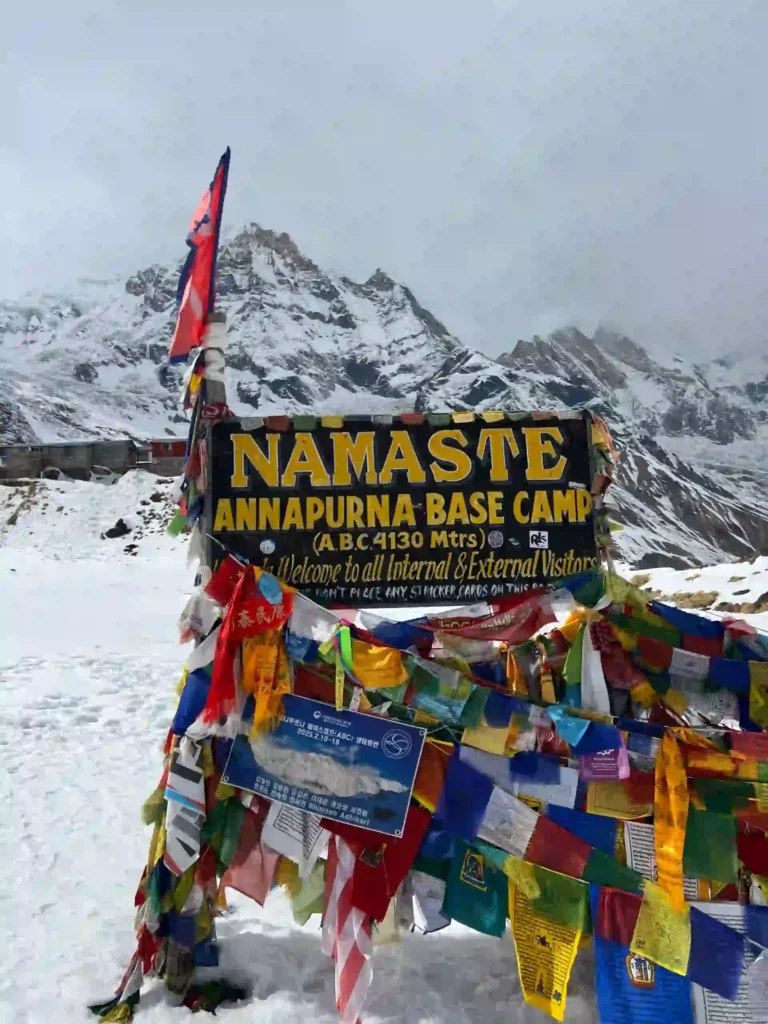
Annapurna Base Camp Trek
A moderate trek that delivers the full Annapurna mountain amphitheater experience without the higher altitudes and longer duration of larger circuits.
Outdoor Himalayan currently lists:
| Package Tier | Price (Per Person) | Best For |
| Budget | $435 | Solo travelers, simple teahouses |
| Standard | $750 | Most trekkers, comfortable lodges |
| Premium | $990 | Couples, upgraded experience |
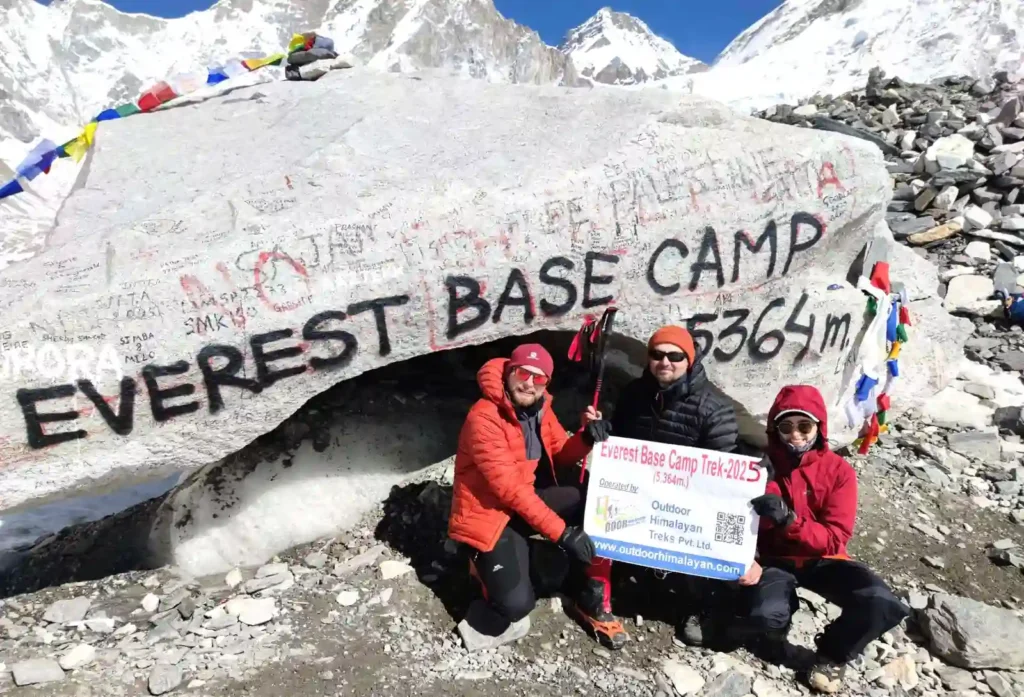
Everest Base Camp Trek — 12 Days
The Everest Base Camp trek cost is naturally higher because of Lukla flights, altitude, and the overall logistics of the Everest region. It is one of Nepal’s most iconic treks, but it is rarely the cheapest.
Nepal’s most iconic trek. Outdoor Himalayan offers three EBC tiers to match different comfort and experience expectations.
| Package Tier | Price (Per Person) | Best For |
| Standard | $1,475 | Most EBC trekkers |
| Luxury | $2,350 | Premium lodges throughout |
| Premium with Helicopter | $3,699 | Trek up + heli return |
Price per person (based on 2 people)
This shows how much the total cost can change depending on comfort level and transport style. A helicopter-supported premium trek is a very different experience from a standard teahouse trek.
Manaslu Circuit Trek
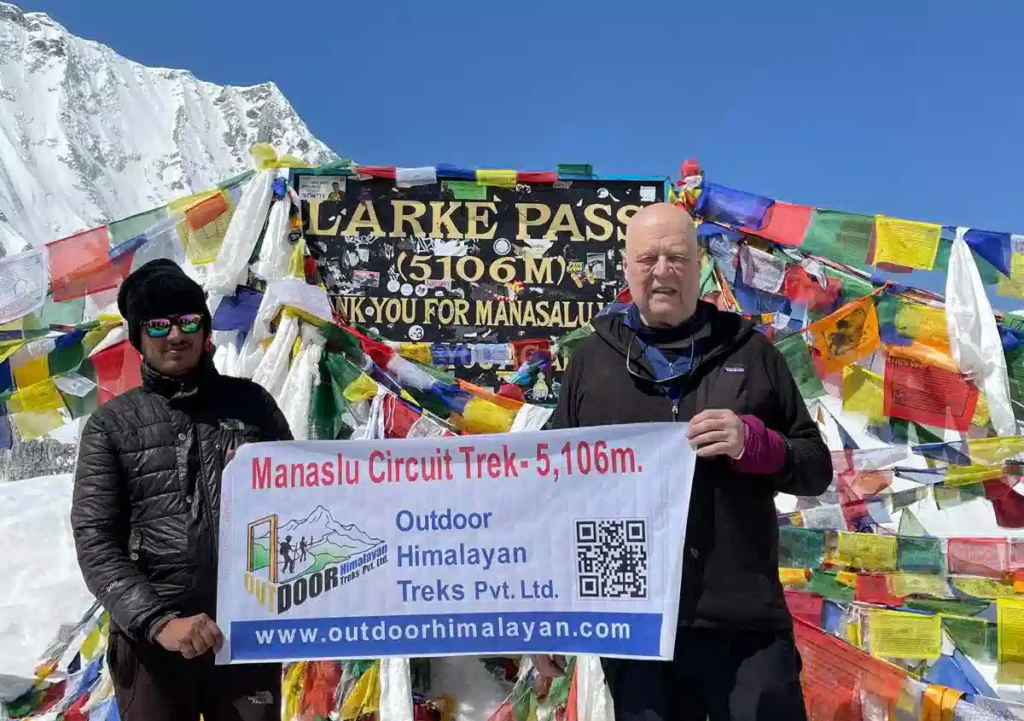
The Manaslu Circuit trek cost is shaped by restricted area permits, guide requirements, and the remoteness of the route. Even so, it can still offer very good value compared to some higher-profile treks.
Outdoor Himalayan currently lists
| Package Tier | Price (Per Person) | Best For |
| Budget | $890 | Tight budget |
| Standard | $1075 | Most trekkers, comfortable lodges |
Costs mentioned in this guide are general estimates and may vary by season, route, agency, and package inclusions.
FAQ
How much does trekking cost in Nepal per day?
It depends on the route, altitude, and comfort level. Shorter treks can cost less per day, while Everest and restricted area treks usually cost more. Package treks also vary depending on what is included.
Is trekking in Nepal expensive?
Not necessarily. Nepal still offers very good value compared to many global trekking destinations. Short treks can be quite affordable, while Everest, luxury, or restricted area treks naturally cost more.
Do I need a guide for trekking in Nepal?
For restricted areas like Manaslu and Upper Mustang, yes — a guide is mandatory. On other routes, rules can vary, so it is best to check before you travel. In most cases, a guide also makes the trek safer and easier.
What is the cheapest trek in Nepal?
Usually, shorter treks like Ghorepani Poon Hill, Mardi Himal, and some short Annapurna routes are the most budget-friendly. They need fewer trekking days, less transport, and lower overall costs.
How much should I budget for Everest Base Camp?
Everest Base Camp is one of the more expensive treks in Nepal because of flights, altitude, and trail costs. Outdoor Himalayan’s standard EBC package starts from USD 1,475 to 1,500 per person, with luxury and helicopter options costing more.
Are permits included in trekking packages?
In many guided packages, yes. Most local trekking agencies include permits in the package price, but you should always check the inclusions before booking.
Common extra costs include visa fees, travel insurance, tips, hot showers, WiFi, charging, snacks, drinks, and gear rental. These small expenses can add up quickly over several days.
Is it cheaper to book with a local Nepal trekking agency?
Often, yes. Booking directly with a local agency usually means lower prices, fewer middleman markups, and better local support. It can also make customization easier.
Final Thoughts: How Much Does Trekking Cost in Nepal?
The Cost of trekking in Nepal is bound to be highly variable and the reason behind this is simple – there is not one trek that looks exactly like another. Route planning may be important, but not as important as permits, guides, transportation, meals, lodgings, and little personal expenses which are frequently forgotten while making budget calculations. Your total budget depends heavily on how much trekking cost in Nepal during the peak spring season
Fortunately, even though costs of trekking in Nepal are variable, they provide excellent value even compared to other popular trekking destinations. Be it the Annapurna Circuit Trek, Everest Base Camp Trek or the Manaslu Circuit Trek – you should know what to expect and how to budget wisely before planning anything.
In case you haven’t decided on what trekking route to choose and what budget to have, we can help you find the perfect option at Outdoor Himalayan.
Need to plan your trek in Nepal? Contact us at Outdoor Himalayan Trek for an individual itinerary and current package cost.
Updated On: 5 Aug 2026