Indra Jatra 2026 Festival Begins
23 Sep 2026 4 min to read

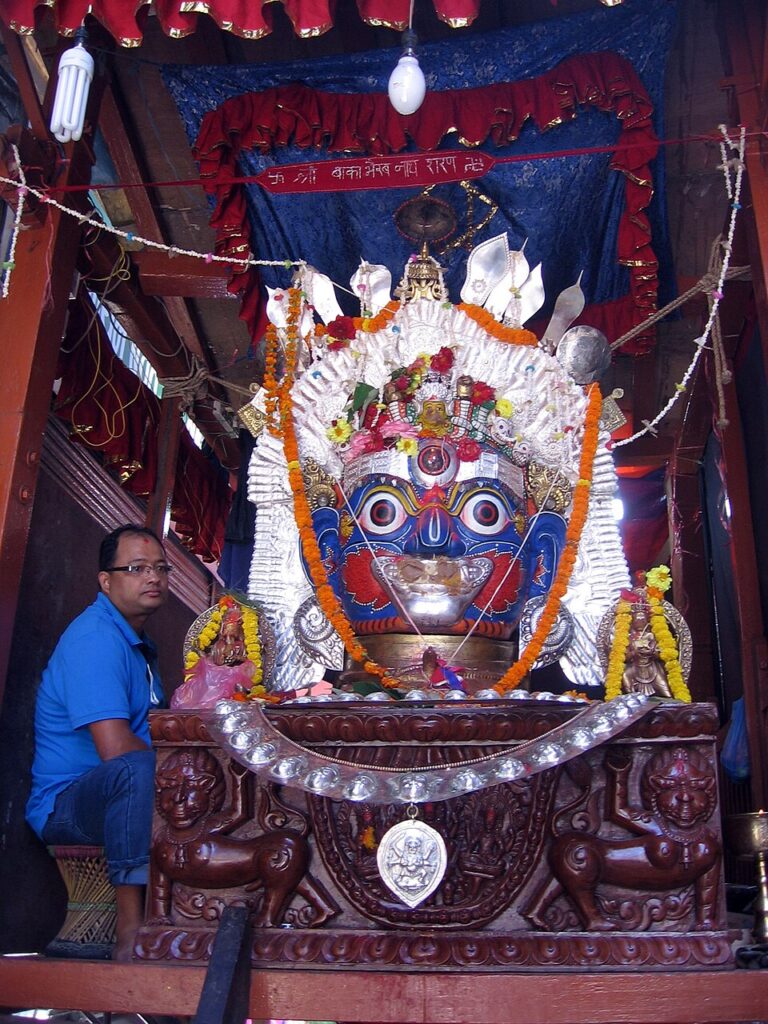
One of the most auspicious Nepali festivals, ‘Indra Jatra’ 2026 begins on September 23 with traditional rituals. Indra Jatra 2026 festival begins with setting up Yosin Thanegu (Indradhwaja Lingam) at the blessed hour of 7:47 am near the Kaal Bhairava temple. A traditional Goddess Dance, Dipyankha, was also performed. This vibrant celebration brings thousands of devotees and tourists to Kathmandu’s historic Durbar Square. To experience this cultural extravaganza firsthand, plan your visit accordingly.
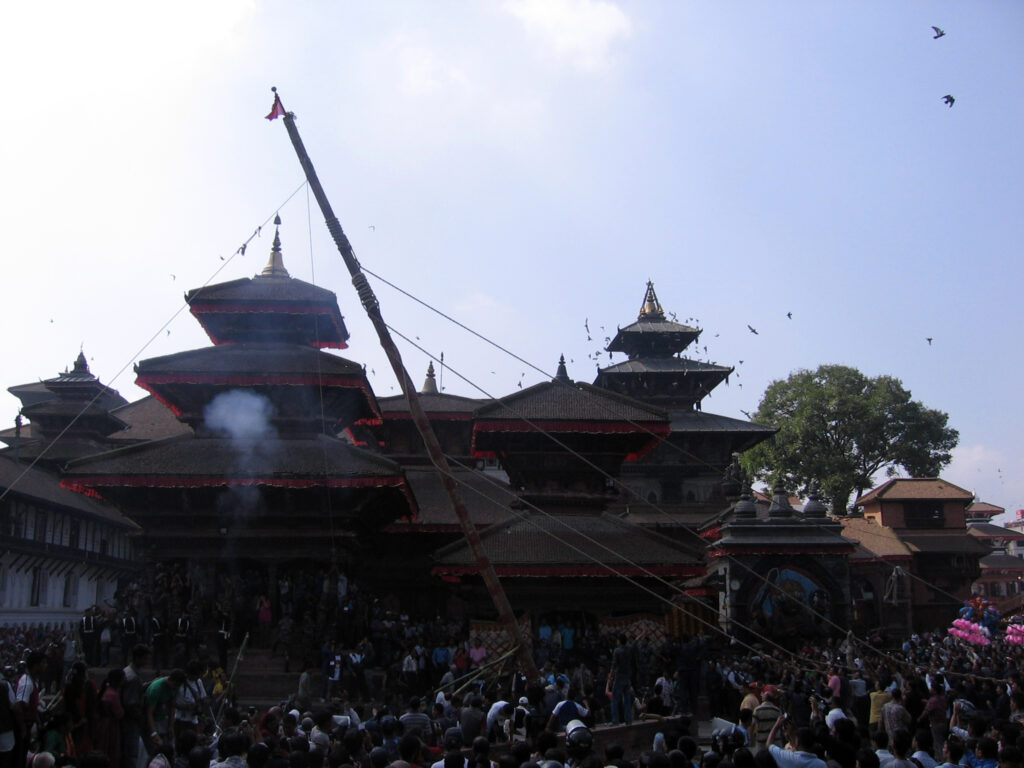
The Newar community in the Kathmandu Valley primarily celebrates it; however, other communities are also keen to observe and celebrate it. In fact, numerous foreign nationals also observe this festival with curiosity. Indra Jatra officially begins in the month of Bhadra Shukla Dwadashi and ends in Bhadra Krishna Chaturthi (Nepali calendar), and Yanla tithi (11th month) according to the Nepali Sambat.
Significance of Indra Jatra
Nepal is religiously and culturally diverse and holds great significance for various festivals or jatras. Indra Jatra, also known as ‘Yenya’ is a major eight-day traditional festival. The jatra combines religious rituals, chariot processions, traditional masked dances, traditional musical instrument performances, and the worship of deities. Among the Newar community, it is the festival to remember deceased family members by lighting oil lamps (diyos), a practice called ‘Upāku Wanegu’. Indra, the Hindu deity of rain, is also connected, signifying the faith in a better harvest and prosperity.
What can we observe?
The jatra predominantly takes place around the ancient streets of the Kathmandu Durbar Square. We can observe the following traditional events.
| Date (for 2026) | Events |
| September 23 | Yonsi Thanegu (Indradhwajotthan/Lingam) The auspicious Yonsi (Indradhwaja) was set up at 7:47 a.m. in front of Kaal Bhairava near Hanumandhoka. Goddess Dance Dipyakhan was also performed. |
| September 24 | Continuation of religious and cultural activities, including traditional dances and rituals. |
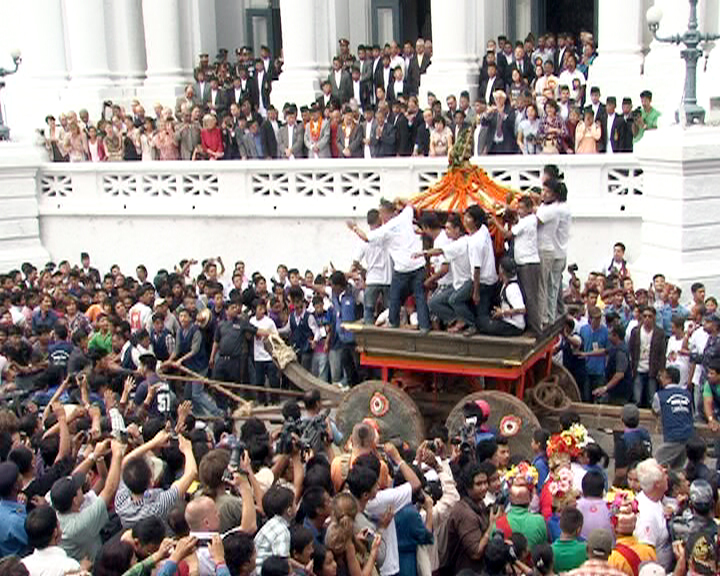
| September 25 | First major chariot procession: The Living Goddess Kumari, Ganesh, and Bhairav chariots follow the route of lower-town (Tallo Tole). ROUTE: Basantapur – Maru – Chikamugal – Jaisideval – Lagan – Brahmatol – Jyabahal – Kohiti – Bhimsensthan – Makhhan -Basantapur. |
| September 26 | Second chariot procession: The Kumari, Ganesh and Bhairav chariots follow the route of upper-town (Mathillo Tole). ROUTE: Basantapur – Pyaphal – Yatkha – Nardevi – Tengal – Nyokha – Nhekan Tole – Asan – Machhindra bahal – Indrachowk – Makhhan – Hanumandhoka – Basantapur. |
| September 27-29 | Various traditional religious and cultural activities, dances and deity worship continue during the festival. |
| September 30 | The final chariot process: Nani Chaya Women traditionally lead the pulling of the chariots on this day. The President traditionally receives tika from the hand of the Living Goddess Kumari. ROUTE: Basantapur – Pyaphal – Yatkha – Nardevi – Kilagha – Bhedasi – Indrachowk – Makhhan – Hanumandhoka – Basantapur. The Indradhwaja is scheduled to lower at 8:37 p.m., formally concluding the festival. |
SOURCE: Kathmandu Metropolitan
Technology meets Jatras
Technology is becoming a good guideline and an integral part of these jatras. Galli Maps is providing users with chariot locations, festival activities (Lakhey or masked dances, and other activities). It provides directions to reach them, as well as nearby places (restaurants, public toilets, hospitals, pharmacies, temples). A best tool that guides users through the narrow streets of Kathmandu.
Conclusion
Indra Jatra is not just a festival; it is an opportunity to witness Nepal’s living cultural heritage. The eight-day-long jatra offers visitors the opportunity to participate in the chariot procession of the living Goddess Kumari and observe traditional dances and rituals closely. One is lucky to witness various traditional lakhey dances, and traditional instruments and music play at once in one jatra. Get familiar with the rich Newari culture and traditions and be a part of it by connecting with the locals.
Photo Courtesy: Wikipedia
Updated On: 25 Sep 2026