Guterres Urges to Visit Nepal: A Powerful Call for Himalayan Climate Impact
31 Oct 2023 2 min to read

United Nations Secretary-General Antonio Guterres urges to visit Nepal Himalayas for Himalayan Climate Impact witnessing who is in Nepal for a 4-day visit. He emphasized that the rapid climate impact results in the rapid melting down of glaciers which further brings catastrophe. In the last decade alone, Nepal’s glaciers melted 65% faster as compared to the previous. This is alarming and under-developed nations like Nepal are paying the price of this global climate change.
He highlighted the present rapid climate change impact is frightening. If this continues then in no time, there won’t be snows in the Himalayas. It further will lead to scarcity of water that will directly affect living beings and other creatures. Furthermore, he urges the members of COP 28 to come and witness the impact live.
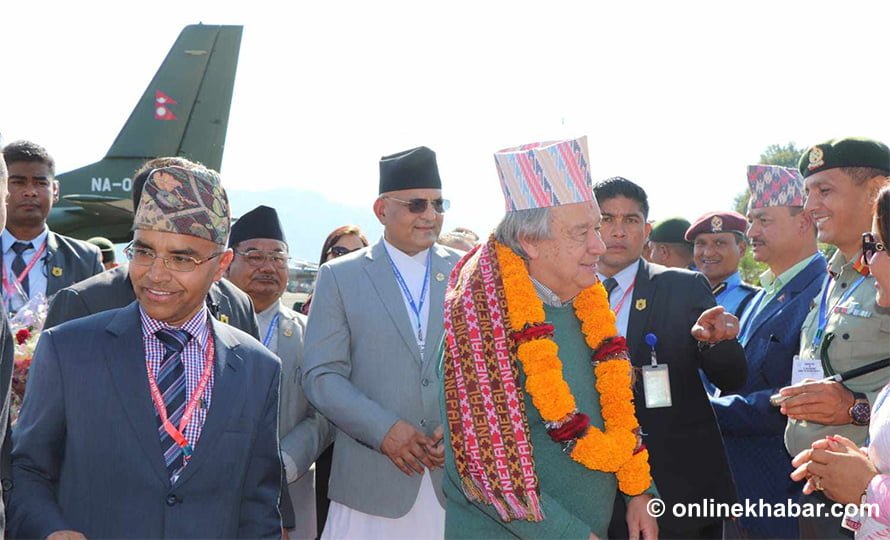
The call for attention by Guterres for an urgent need for global collaboration and measures to address climate change in the Himalayan region. Most people living in South Asia and Southeast Asia are directly affected by this climate impact. Overall, implications both on environmental and socio-economic aspects are a need of the present.
An immediate call for action and collaborative intensive effort to minimize this impact is essential for this situation. The necessary actions that are compatible with changing climate patterns and effects in the Himalayas must be diligently addressed.
Guterres emphasizes the safeguarding of these mountains and glacier melting by ending the harmful environmental practices that directly contribute to climate change.
Photo Courtesy: Online Khabar
Himalayan Climate Impact and Nepal’s Path Forward
The growing Himalayan Climate Impact highlighted by global leaders like Guterres is not only an environmental concern but a shared responsibility for governments, travelers, and local communities alike. From melting glaciers and fragile mountain ecosystems to livelihoods tied closely to tourism, the future of Nepal’s Himalayas depends on informed action and sustainable travel choices.
Travelers planning journeys to regions such as the Everest, Annapurna, or Manaslu areas can play a meaningful role by choosing responsible trekking routes and ethical operators. By staying informed and supported conservation-focused tourism, visitors help ensure that the Himalayas remain resilient, accessible, and awe-inspiring for generations to come.