Why 60% of Everest Base Camp Trekkers Almost Quit (And How to Be the 40% Who Don’t)
10 May 2026 12 min to read
The post says many Everest Base Camp trekkers nearly quit because of avoidable mistakes, not lack of fitness. It cites guide-based success rates, explains common problems such as poor acclimatization, wrong pacing, and inadequate packing, and emphasizes the value of professional guidance.
It also notes that Everest is not visible from Base Camp, outlines descent and insurance risks, and says the trek is more likely to succeed when travelers prepare for altitude, rest days, and evacuation coverage.
The Real EBC Quit Rate: Why People Quit Everest Base Camp Trek More Than You Think
Most articles say the Everest Base Camp trek is tough yet doable. What they don’t mention is how many people turn back when exhaustion hits and how often hikers nearly quit along the trail. If you’re wondering why those people quit Everest Base Camp trek, the answer isn’t fitness; it’s mistakes.
We’ve guided over 500 trekkers to EBC, and the numbers tell a clearer story. About 20 to 30 percent of trekkers officially quit before reaching the Base Camp. But what stands out is this: 60 percent admit they almost quit at some point along the trail.
The good news is that having a guide changes everything. Guided trekkers finish at a 90 percent success rate, while independent trekkers (before the 2023 rule change) finished at only 75 to 85 percent. The difference isn’t about how fit they are or how much willpower they have. The most important thing is to avoid the same avoidable mistakes again and again.
Below are some of the most common mistakes that we’ve seen most travelers make that make them want to quit. We have also included how to avoid the mistakes in this blog.
7 Mistakes that Make EBC Trekkers Want to Quit (And How to Avoid Them)
Mistake #1: Ignoring Acclimatization Days
The number one reason trekkers quit isn’t exhaustion or bad weather; its altitude sickness. And most cases of altitude sickness come down to one reason: skipping or rushing acclimatization days.
The standard EBC itinerary includes rest days in Namche Bazaar and Dingboche for a reason. Your body needs time to adjust to the altitude and its thin air. Rushing past those stops to “save time” of because they “feel fine”, almost always leads to trouble later on. By the time trekkers hit Lobuche or Gorak Shep, fatigue or sickness tends to catch up fast.
Most folks drop out along the path from Namche to Dingboche. Oxygen thins fast there; those who skipped proper rest begin battling headaches, nausea, and extreme fatigue.
How to avoid it: Don’t skip rest days. Try gentle, uphill walks to higher altitudes then return to sleep lower; this is called “trek high, sleep low”. And listen to your guide. They know what to watch out for. We’ve seen trekkers push though mild symptoms only to be evacuated by helicopter two days later. For trekkers who want a more gradual acclimatization curve, our Everest Base Camp Trek via Jiri adds extra days at lower altitudes before even reaching Lukla.
Mistake #2: Packing Wrong (Too Much or Too Little)
Packing mistakes fall into two categories, and both can ruin your trek.
The first is packing too much. Some travelers arrive with luggage weighing 20 kilograms. This works well enough in Kathmandu. But once past Namche, porters have strict wright limits (usually 10-15 max). Over that limit brings added costs, sometimes $200 or more. Worse, carrying excess tires you faster, stealing strength meant for high elevations.
The second is packing too little or packing wrong. Trekking in a cotton t-shirt isn’t recommended as it tends to soak up sweat, stays wet for hours and chills you dangerously fast. Higher up past Namche, clean water costs $5 per liter every time your refill. No filters means paying more each day. Also the sun at 5,000 meters burns through clouds so not bringing sunscreen or lip balm would be a big mistake for you skin.
How to avoid it: Start smart by using a reliable packing checklist from a reputable agency. The non-negotiables are: down jacket, thermal base layers, waterproof outer shell, hiking boots already broken in, water purification tablets or filter, SPF 50+ sunscreen, first aid with personal medications and a headlamp. Everything else is optional.
Mistake #3: Walking Too Fast on Days 1-3
First-time trekkers often arrive in the Himalayas feeling fit and excited. They charge up the first few trails, passing slower trekkers, feeling strong. Then by day three, they’re hit with splitting headaches and crushing fatigue.
Walking fast at low altitude is fine. Once you climb past 2,500 meters, though, things shift; your body must adapt slowly to thinner air. Moving quickly during the first three days forces muscles to burn through oxygen faster than your bloodstream keeps up. That mismatch often triggers Acute Mountain Sickness (AMS) right away: symptoms like headaches, nausea, dizziness, and loss of appetite show up.
We see this mistake in nearly 1 out of 3 trekkers we guide. The ones who start fast almost always struggle by Namche. The ones who start slow almost always reach Base Camp.
How to avoid it: Walk at the speed your guide sets, never match your pride. The mantra is “slow and steady”. You should be walking slowly enough to hold a conversation. If you’re breathing hard, you’re going too fast. Let faster trekkers pass you. They’ll likely be the ones turning back later.
Mistake #4: Not Preparing for the “Boring” Days
Acclimatization days surprise most trekkers. Hiking every single day feels like the plan. Instead, you spend a full day in Namche Bazaar, another in Dingboche, with very little walking. Some trekkers love the break, while others feel restless, bored, or frustrated. They ask their guide to push ahead. They sit in the teahouse scrolling their phone.
That restlessness becomes a mental trap. Trekkers who don’t know what to do with rest days often talk themselves into quitting. They often tend to think why they’re stopping there and by the time they resume the trek, their motivation starts to fade away.
How to avoid it: Plan for rest days before you arrive. Bring a book. Movies or podcasts downloaded on your phone (wi-fi is spotty and expensive). Slow strolls uphill keep your body adjusting without strain. The trekkers who treat rest days as part of the adventure are almost always the ones who finish it. If rest days sound unbearable to you, our Luxury Everest Base Camp Trek upgrades teahouses along the route. Better food, private rooms, and actual lounges make rest days feel like a retreat instead of wait.
Mistake #5: Underestimating the Descent
Up at high altitudes, most people pour all their energy into reaching Base Camp. Reaching it is half the achievement as the other main struggle lies in the descent.
Downhill steps are harder on your body in different ways. Your knees absorb repeated shocks over jagged ground. Your toes jam into the front of your boots hour after hour. The cumulative fatigue from days of trekking hits all at once. And mentally, the excitement of “reaching the goal” is gone, replaced by the simple grind of walking back the way you came.
We’ve seen trekkers handle the uphill beautifully, only to suffer on the downhill. Swollen knees, blistered toes, and a surprising lack of motivation. A few even think about taking a helicopter back to Lukla just to skip the final days of descent.
How to avoid it: Train your muscles before you arrive. Try step-down moves, squats, or lunges as they help a lot. Use trekking poles as they cut stress on knees, often by over a quarter. Short toenails matter once trails tilt downward. Downhill trails test your legs just like climbs do. Those moving well at the end treat descents with equal care. Mindset matters when gravity pulls you forward. Strong finishes come from balanced effort. Respect both rise and fall of the path.
Mistake #6: Skipping Travel Insurance with Heli Evacuation
Trekkers tend to think their credit card or standard travel insurance covers them in Nepal. Most don’t.
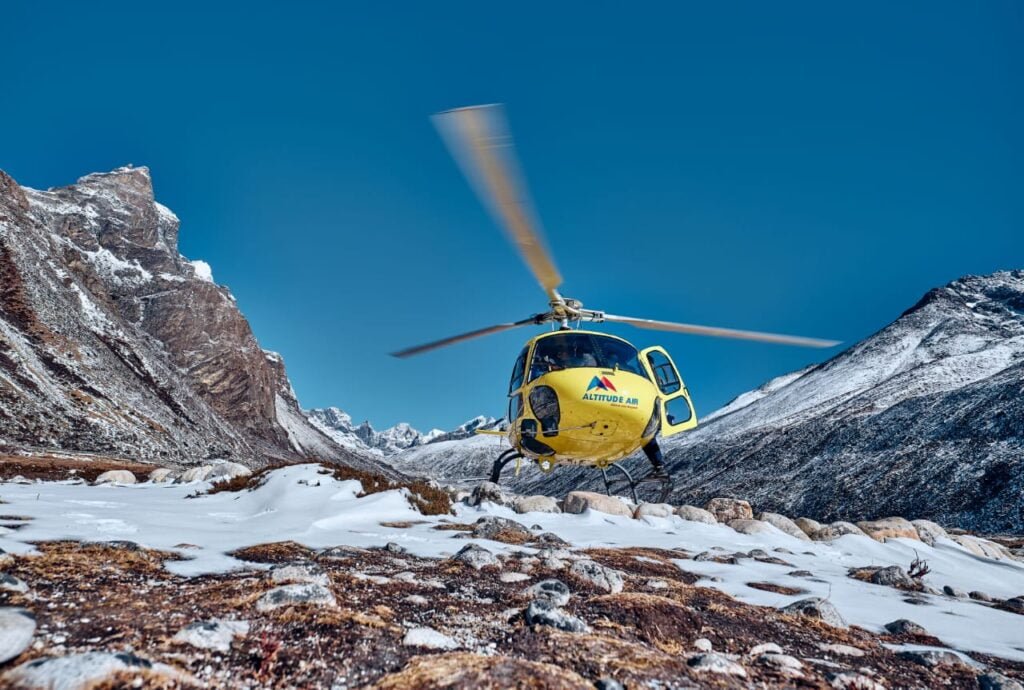
If you’re hit hard by severe altitude sickness past Namche, and it can happen to anyone, regardless of fitness, the only way out is a helicopter. The cost ranges from 5,000 o 10,000 depending on where you are. Some climbers have to empty their bank accounts, or stay put for days hoping symptoms improve because they couldn’t afford evacuation.
Most policies skip coverage for high-altitude trekking above 5,500 meters. Only a handful include it. Look closely; your plan must mention “trekking up to 6,000 meters” or “high-altitude helicopter rescue”. Rescue by helicopter at extreme heights isn’t standard. Never assume. Check every detail of the fine print.
How to avoid it: Before booking your trek, buy a policy from a provider that covers Nepal and explicitly includes helicopter evacuation above 5,000 meters. Bring a printed copy of your policy and emergency numbers. We check every trekker’s insurance before departure. If you don’t have the right coverage, we won’t let you start.
Mistake #7: Not knowing you can’t see Everest from Base Camp
This is something that disappoints more trekkers than any other, and almost no one talks about it before they go. The summit of Mount Everest cannot be seen from Everest Base Camp.
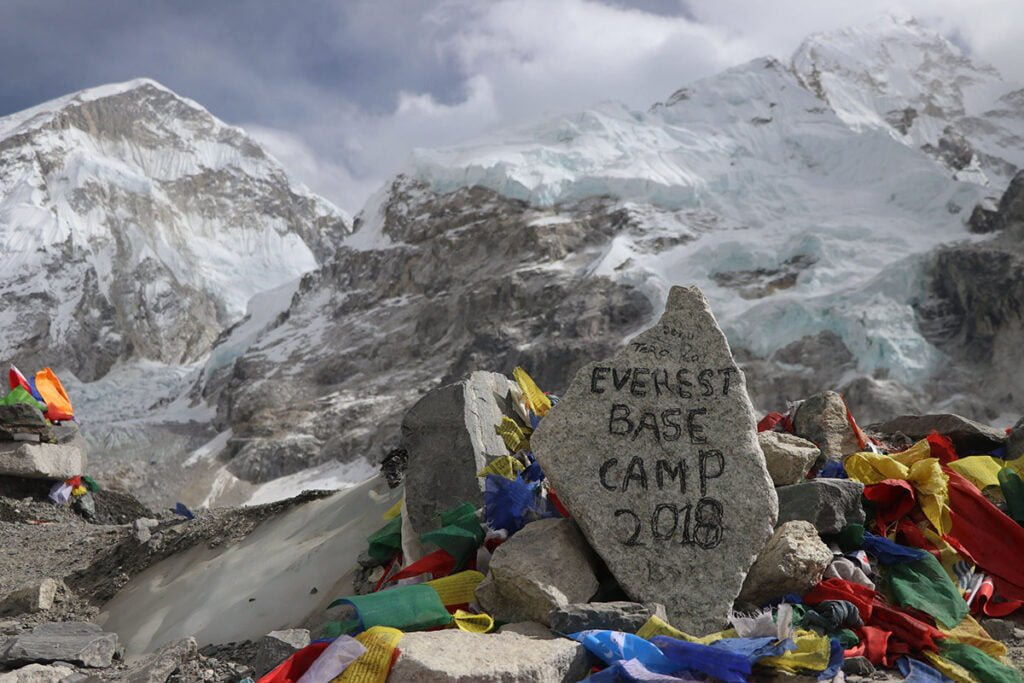
Strange, but true. Trekking for multiple days just to reach the foot of Earth’s highest peak. Yet once arrived, Everest hides, blocked by the massive ridge of Nuptse and the west shoulder of Everest. All you see are surrounding peaks, the Kumbu Icefall, and prayer flags.
We ask the trekkers after their trip what surprised them most. Nearly half mention something like: “Turns out, you can’t really view Everest from Base Camp.”
Where do you see Everest? From Kala Patthar (5,645 meters), side hike that some do before reaching Base Camp while others go up the next morning instead. That’s where the classic sunrise photos of Everest’s summit come from. This moment makes the while trek feel worth it.
How to avoid disappointment: Know this before you go. Base Camp is about the journey, the icefall, the glacier, and the feeling of standing where climbers launch their expeditions. The Everest summit view happens at Kala Patthar. Any good itinerary includes both. Think twice and ask if your itinerary skips one.
For trekkers who want the summit view without the long descent, our Everest Base Camp Trek Return to Lukla by Helicopter lets you see Everest from Kala Patthar, reach Base Camp, then fly back to Lukla iin 20 minutes instead of walking 4 days downhill.
FAQ: Quick Answers about EBC Success Rates
What percentage of trekkers actually reach Everest Base Camp?
According to the industry data and our own records, 70 to 80 percent of trekkers reach Base Camp. The 20 to 30 percent who turn back, usually do so because of altitude sickness, injury, or lack of proper acclimatization. With a professional guide, that success rate jumps to 90 to 96 percent.
Can a beginner do the Everest Base Camp trek?
Yes, but preparation matters. Beginners who train for 3 to 6 months, follow a guided itinerary, and listen to their bodies do well. Beginners who arrive with no training or try to go too fast rarely finish. Fitness isn’t the only factor; patience and mental preparation matter just as much.
What is the hardest day of the EBC trek?
Most trekkers say the stretch from Dingboche to Lobuche (around 4,900 meters) hits the hardest. The altitude jumps significantly, the trail is exposed and windy, and your body feels every meter of gain. The hike up to Kala Patthar (5,645 meters) is physically harder but ends quicker.
How do I know if I’ll get altitude sickness?
You don’t. Altitude sickness can affect anyone regardless of age, fitness, or previous high-altitude experience. The best predictor is how well you acclimatize. Trekker who have had AMS before are more likely to get it again.
Do I need to book EBC trek in advance?
Yes. Since the 2023 rule requiring guides, most trekkers book through agencies. Permits, teahouses reservations, and flights to Lukla fill up weeks or months in advance during peak seasons (March-May and September-November). Last-minute bookings are possible but risky.
What happens if I get sick above Namche?
Your guide will assess your symptoms using the Lake Louise Score system (standard AMS assessment). Mild symptoms will go just by enough rest and hydration. But if the symptoms are moderate, you’ll descend immediately. Severely symptoms like HACE or HAPE will require helicopter evacuation. This is why insurance with heli coverage is non-negotiable.
Bottom Line: How to Join the 40% Who Don’t Quit (And Actually Enjoy It)
Sixty percent of EBC trekkers almost quit. The 40 percent who don’t aren’t stronger or luckier. Instead, they sidestep common errors that trip many travelers like skipping acclimatization, packing wrong, walking too fast, underestimating rest days and the descent, not knowing about the Everest view and showing up without proper insurance.
Success often comes down to who leads the way. A professional guide sets your pace, catches altitude symptoms early, handles logistics so you can focus on trekking, and makes decisions based on hundreds of previous trips; not just one person’s experience.
We’ve guided many trekkers to Everest Base Camp. Our success rate is 94 percent. We provide pre-trek packing checklists, altitude preparation advice, and insurance guidance before you leave home.
Still deciding which route is route for you? Here are the rest of our EBC options:
- Everest Base Camp Trek via Salleri – No Lukla flight. Best for nervous flyers.
- Everest Base Camp via Cho La Pass – Adds a 5,420m pass. Best for experienced trekkers.
- Everest Base Camp Yoga Trek – Daily yoga sessions. Best for mindfulness.
- You can browse all Everest region trek packages here. Or send us a message. We’ll answer every questions you have and recommend the right trek for you!
Updated On: 14 Aug 2026