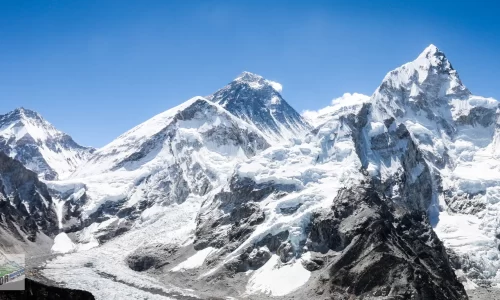
14 Highest 8000m Mountains in Nepal (8 International + 6 Nepal-Recognized)
15 Jun 2023 10 min to read
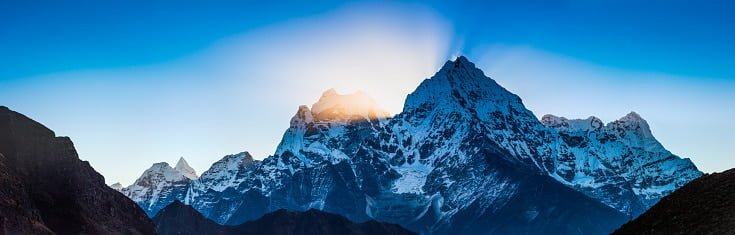
Nepal has 8 internationally recognized mountains above 8,000m. Since early 2025, six additional summits have joined the official climb lists under new tourism rules by Nepal Department of Tourism for permit purposes, bringing the total to 14.
Nepal sits high in the Himalayas as the world’s premier mountaineering destination. The 8 classic eight-thousanders-Everest, Kanchenjunga, Lhotse, Makalu, Cho Oyu, Dhaulagiri, Manaslu, and Annapurna- have long held fame. Recent surveys by Nepali geographers have identified 6 additional peaks above 8,000m awaiting international recognition. These 6 mountains are: Yalung Khang, Kanchenjunga South, Kanchenjunga Central, Lhotse Middle, Lhotse Shar, and Kanchenjunga West. You can see these names listed in the Nepal Himal Peak Profile official page.
Below is the complete list with details of each.
Sagarmatha/Mt. Everest
Height: 8,848.86 m
Himalayan Range: Khumbu/Mahalangur
District: Solukhumbu
Province: Koshi
Facts:
- World’s Highest/Tallest Mountain
- First Ascent Date: May 29, 1953
- Tenzing Norgay Sherpa & Sir Edmund Hillary were the first successful Everest climbers.
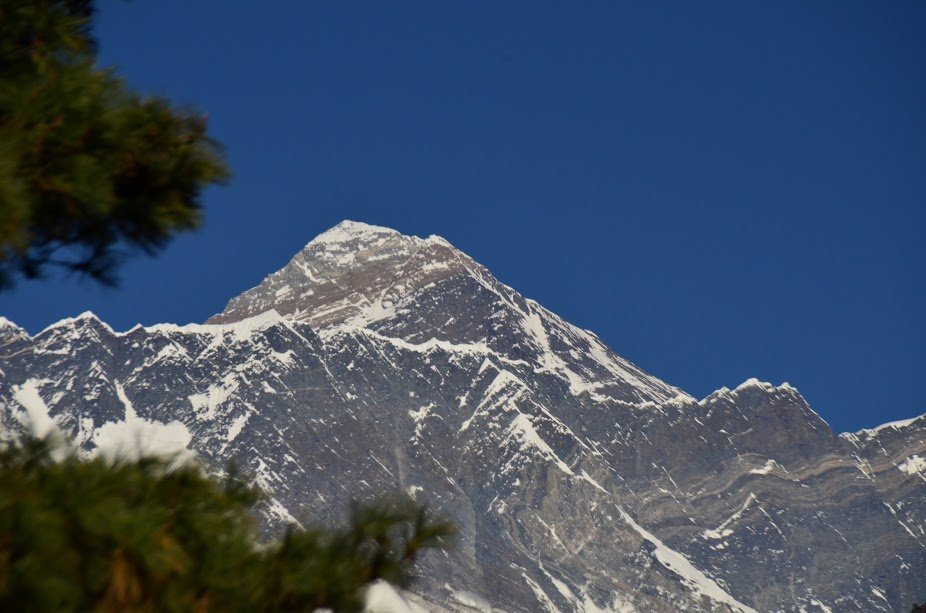
Mount Everest, also known as Sagarmatha in the Everest region of Nepal and Qomolungma/Chomolungma in Tibet, is the world’s tallest mountain. It is highly revered by Tibetans and was previously referred to as Peak XV. Many climbers, including experienced mountaineers, are drawn to conquer its peaks. There are two primary climbing routes: one from the southeast in Nepal and the other from the north in Tibet. The most popular path is the Southeast Ridge.
In 1852, Everest was officially recognized as the highest mountain in the world. The first successful ascent took place on May 29, 1953, marking a historic achievement. Since then, over 6,000 people have successfully reached the summit of Everest, with a small percentage of fatalities. Kami Rita Sherpa from Nepal holds the remarkable record for the most Everest summits, with an impressive 28 successful climbs.
Kanchenjunga (Main)
Height: 8,586 m
Himalayan Range: Kanchenjunga
District: Taplejung
Province: Koshi
Facts:
- World’s 3rd-highest mountain
- First Ascent Date: May 25, 1955
- George Band and Joe Brown were the first successful Kanchenjunga (Main) climbers.
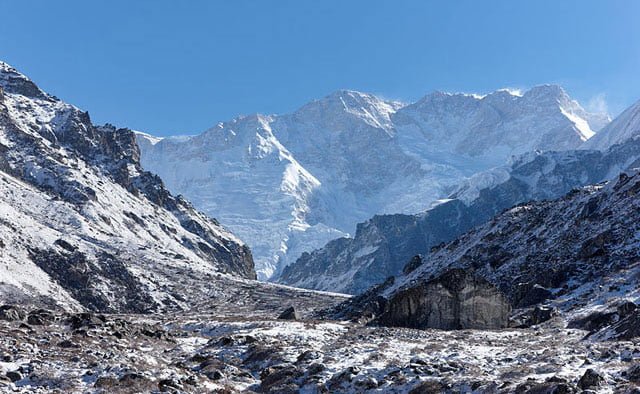
The third-highest mountain in the world Kanchenjunga is sacred to the people of Sikkim. The meaning of Kanchenjunga to them is ‘Five treasures of the Great Snows’. It is located 128 km east of Everest. It is a massive mountain with narrow icy ridges, giving rise to several satellite peaks. Kanchenjunga Main is the highest point in the Brahmaputra River basin, which is part of the Southeast Asian monsoon regime and one of the largest river basins globally. It spans the border between Nepal and the Mangan district in Sikkim, India. Kanchenjunga was once considered the tallest mountain before Everest claimed that title.
Lhotse (Main)
Height: 8,516 m
Himalayan Range: Khumbu/Mahalangur
District: Solukhumbu
Province: Koshi
Facts:
- World’s 4th-highest mountain
- First Ascent date: May 18, 1956
- Fritz Luchsinger and Ernst Reiss were the first successful Lhotse climbers.
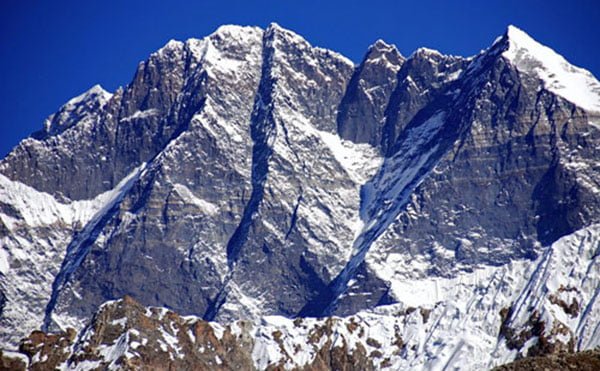
Lhotse is the world’s fourth highest mountain, located on the border between China’s Tibet Autonomous Region and Nepal’s Khumbu region. It forms the apex of the horseshoe-shaped Everest massif, with Everest to the north and Nuptse to the west. The mountain’s main ridge consists of three distinct summits: Lhotse Main at (8,516 m), Lhotse Middle (8,413 m), and Lhotse Shar at (8,400 m). Lhotse is renowned as one of the toughest and less frequently climbed mountains above 8,000 meters due to its perilous rocks, arid terrain, and constant risk of rock falls.
Makalu I
Height: 8,463 m
Himalayan Range: Kumbhakarna
District: Sankhuwasabha
Province: Koshi
Facts:
- World’s 5th-highest mountain
- First Ascent date: May 15, 1955
- French climbers Lionel Terray and Jean Couzy were the first successful Makalu climbers.

Makalu I is a mountain peak that is found only 14 miles east of Mount Everest. It is remarkable not only for its size but also for its perfectly shaped pyramid structure, featuring four sharp ridges. This makes it even more breathtaking as the 5th highest mountain in the world. Makalu has two noteworthy peaks called Kang Chungtse and Makalu II, which are situated around two miles to the north-northwest of the main summit. Makalu Expedition is full of adventure and challenges.
Cho Oyu
Height: 8,201 m
Himalayan Range: Khumbu/Mahalangur
District: Solukhumbu
Province: Koshi
Facts:
- World’s 6th-highest mountain
- First Ascent date: Oct 19, 1954
- Joseph Jochler, Herbert Tichy, and Pasang Dawa Lama were the first successful Cho Oyu climbers.
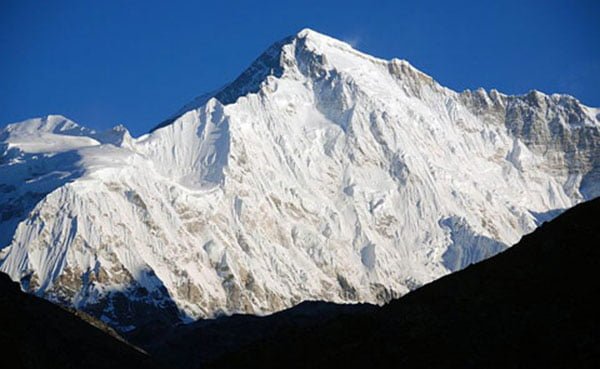
Cho Oyu, known as the “Turquoise Goddess” in Tibetan, is located 20 km west of Mount Everest. It is the second most climbed peak above 8,000 meters, following Everest. It is considered an ideal mountain for high-altitude climbing. Adjacent to Cho Oyu is the Nangpa La, a glacier pass at 19,000 feet, which served as a crucial trade route between Khumbu Sherpas and Tibet during the 15th century.
Dhaulagiri I
Height: 8,167 m
Himalayan Range: Dhaulagiri
District: Myagdi/Mustang
Province: Gandaki
Facts:
- World’s 7th-highest mountain
- First Ascent date: May 13, 1960
- Peter Diener, Kurt Diemberger, Albin Schelbert, Ernst Forrer, Nima Dorje Sherpa, and Nawang Dorje Sherpa were the first successful Dhaulagiri I climbers.

Dhaulagiri I is the 7th highest mountain globally and the highest within a single country (Nepal’s borders). It is also the highest point of the Gandaki River basin. This mountain is known for its unique mound shape. Dhaulagiri is often called the dazzling white beautiful mountain. Its rugged terrain is marked by curving ridges, glaciers, and icefalls, adding texture to its overall landscape. The main ridge is adorned with several pyramid-shaped peaks. Dhaulagiri expedition lets you climb this challenging peak.
Manaslu
Height: 8,163 m
Himalayan Range: Ganesh
District: Gorkha
Province: Gandaki
Facts:
- World’s 8th-highest mountain
- First Ascent date: May 9, 1956
- Toshio Imanishi and Gyalzen Norbu were the first successful Manaslu climbers.
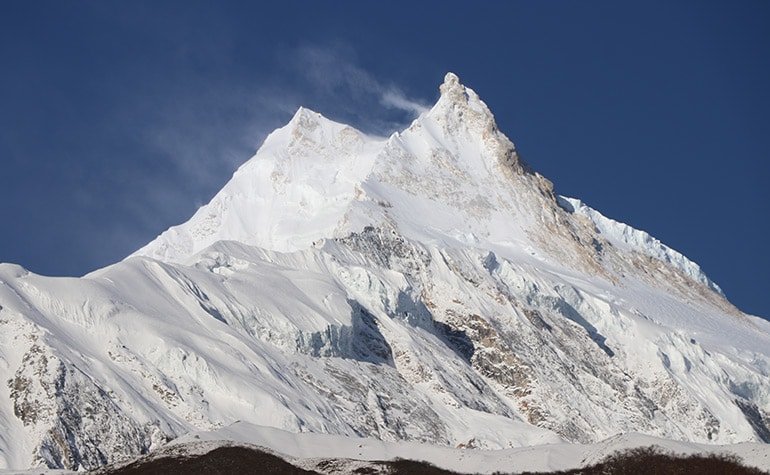
Manaslu, the highest mountain in the Gorkha district, is located approximately 40 miles east of Annapurna. In Tibetan, it is called ‘Kutang,’ meaning ‘Mountain of Spirits.’ The name Manaslu comes from a Sanskrit word, ‘Manasa’ signifying intellect or soul. It has gained the nickname Killer Mountain. The Manaslu Conservation Area Project (MCAP) was established in 1997 to ensure the conservation and sustainable management of the region, including the Manaslu mountain area.
Annapurna I
Height: 8,091 m
Himalayan Range: Annapurna
District: Kaski
Province: Gandaki
Facts:
- World’s 10th-highest mountain
- First Ascent date: June 3, 1950
- French climbers Maurice Herzog and Louis Lachenal were the first successful Lhotse climbers.
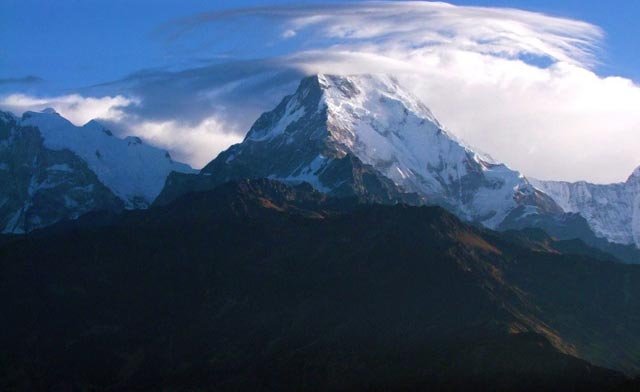
Annapurna I is the first 8,000-meter mountain successfully climbed in the world. It is part of a range that includes four other peaks: Annapurna II, Annapurna III, Annapurna IV, and Annapurna South, each with varying heights. The entire area, along with the surrounding region, is protected as the Annapurna Conservation Area, which is the largest conservation area in Nepal, spanning 7,629 square kilometers. The mountain gets its name from Annapurna, the Hindu goddess of food and nourishment, believed to reside there. It is considered one of the most dangerous among the highest mountains.
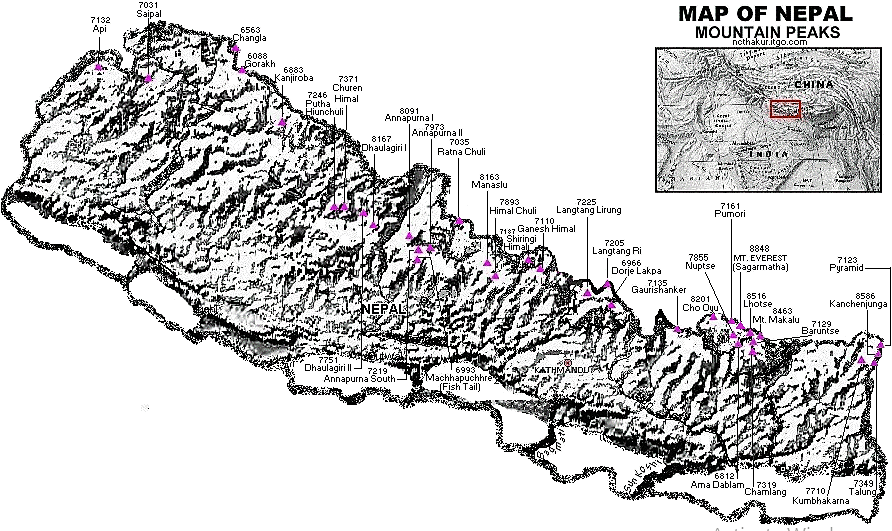
Yalung Khang (8,505 m), Kanchenjunga South (8,476 m), Kanchenjunga Central (8,473 m), Lhotse Middle (8,413 m), Lhotse Shar (8,400 m), and Kanchenjunga West (8,077 m), are other 6 eight-thousanders. These six mountain peaks aspire for acknowledgment as eight-thousanders, awaiting their deserved international recognition.
Yalung Khang
Height: 8,505 m
Himalayan Range: Kanchenjunga
District: Taplejung
Province: Koshi
Facts:
- The second highest peak on the Kanchenjunga Himalayan Range.
- It was first ascent on May 14, 1973, by Japanese climbers Takao Matsuda and Yutaka Ageta.
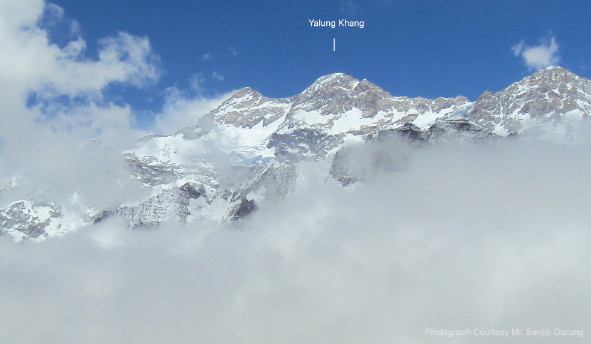
Yalung Khang is the 2nd highest peak on the Kanchenjunga Himalayan Range. Yalung Khang is situated 1.1 km in the north-northwest direction from the Kanchenjunga Main, and it is located 1.3 km to the east of Yalung Khang West. It takes around 70 days to complete the expedition.
Kanchenjunga South
Height: 8,476 m
Himalayan Range: Kanchenjunga
District: Taplejung
Province: Koshi
Facts:
- It shares the border with Nepal and Mangan district, Sikkim.
- On May 19, 1978, Polish climbers Wojciech Wroz and Eugeniusz Chrobak successfully ascended Kanchenjunga South.
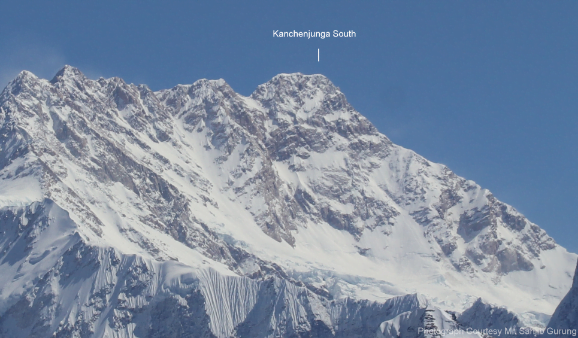
Mount Kanchenjunga South is situated in the Phaktanglung rural municipality of the Taplejung district in Nepal. It takes around 75 days to complete the expedition. It follows the caravan route passing through Taplejung, Yamphudin, and Ramachaur to the base camp.
Kanchenjunga Central
Height: 8,473 m
Himalayan Range: Kanchenjunga
District: Taplejung
Province: Koshi
Facts:
- It shares the border with Nepal and Mangan district, Sikkim.
- Polish climbers Wojciech Branski, Zygmunt Heinrich, and Kazimierz Olech successfully ascended Kanchenjunga Central on May 22, 1978.
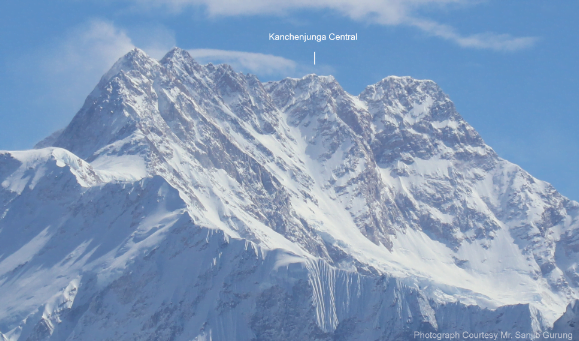
Mount Kanchenjunga Central lies on the border of Sirijanga rural municipality in Nepal’s Taplejung district. Kanchenjunga Central is positioned 0.8 km south-southeast of Kanchenjunga Main and 0.5 km north-northwest of Kanchenjunga South.
Lhotse Middle
Height: 8,413 m
Himalayan Range: Khumbu/Mahalangur
District: Solukhumbu
Province: Koshi
Facts:
- It is also popular as Lhotse Central I and Lhotse East.
- Russian climbers Sergei Timofeev, Alexei Bolotov, Piotr Kouznetsov, and Evgeni Vinogradski successfully ascended on May 23, 2001.
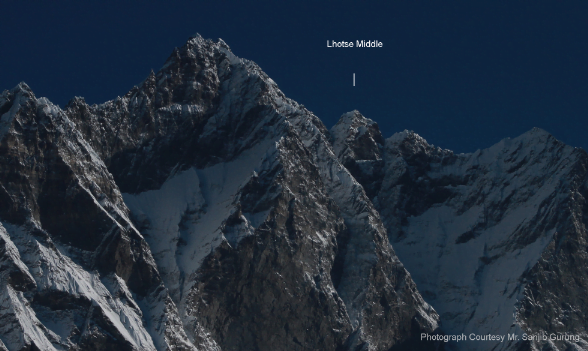
Lhotse Middle, located in Nepal’s Solukhumbu District, is open for expeditions. Climbing this peak typically takes around 60 days. The journey begins with a flight to Lukla, followed by a caravan route passing through Jorsale, Namche, Khumjung, Pheriche, Lobuche, Gorakshep, and finally reaching the Base Camp. The closest settlement to Lhotse Middle is in Lobuche. Lhotse Middle, for the longest period, held the title of the highest 8000 m on Earth that hadn’t been climbed. Finally, it was successfully ascended for the first time on May 23, 2001.
Lhotse Shar
Height: 8,400 m
Himalayan Range: Khumbu/Mahalangur
District: Solukhumbu
Province: Koshi
Facts:
- It is also popular as Lhotse II.
- It was first ascent on May 12, 1970, by Austrian climbers Rolf Walter and Sepp Mayerl.
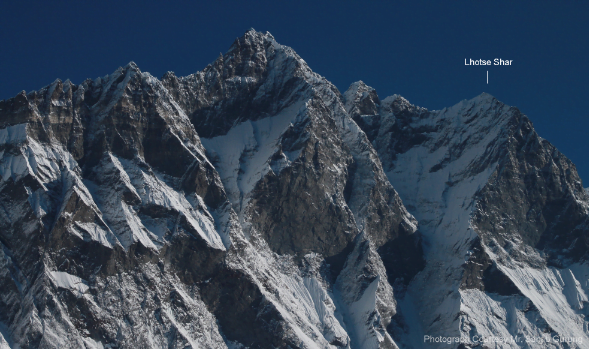
Mount Lhotse Shar, a subsidiary peak of Lhotse, is situated south of Mount Everest in the Solukhumbu District. It is open for expeditions, and the climb typically takes around 56 days. The journey begins with a flight to Lukla, followed by a caravan route passing through Jorsale, Namche, Khumjung, Pangboche, and Dingboche, and finally reaching the Base Camp. Dingboche serves as the nearest settlement to the peak.
Kanchenjunga West (Yalung Khang West)
Height: 8,077 m
Himalayan Range: Kanchenjunga
District: Taplejung
Province: Koshi
Facts:
- The 5th-highest peak of the Kanchenjunga Himalayan Range.
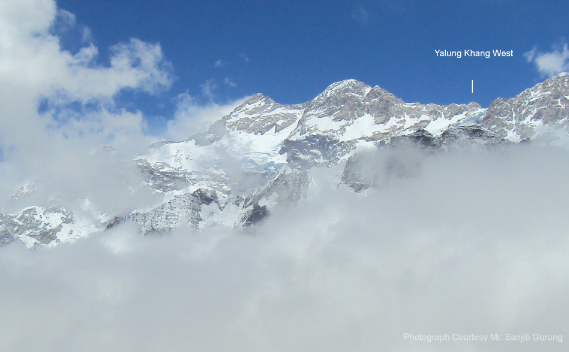
Mount Kanchenjunga West, also known as Yalung Khang West, is situated in the Phaktanglung rural municipality of the Taplejung district in Nepal. It is the fifth-highest peak in the Kanchenjunga Himalayan range. Kanchenjunga West is located 1.7 km south-southeast of Khangbachen and 1.3 km west of Yalung Khang.
Frequently Asked Questions about Nepal’s 8000m Mountains
How many mountain are there in Nepal?
If counting all peaks, not just those above 8,000m, Nepal has over 1,300 mountains above 6,000m and thousands of smaller peaks. For the 8,000m+ peaks specifically, see the answer above.
Which 8000m peak is easiest for beginners to see?
From a trekking perspective (not climbing), Cho Oyu and Everest offer the most accessible base camps. Cho Oyu’s north side in Tibet requires less walking, while Everest Base Camp in Nepal is a well-supported 12-14 day trek with teahouses every night. Annapurna Base Camp is also beginner-friendly at 4,130m (not 8,000m+ but offers stunning views of Annapurna I).
For what it’s worth, we’ve taken over many first-time trekkers to Everest Base Camp over the years and plenty with zero experience have done it just fine.
How many tallest mountain in Nepal?
Nepal has 8 mountains that rank among the world’s 14 tallest peaks above 8,000m. Mount Everest (8,848m) is the tallest in Nepal and the world. The remaining 7 are Kanchenjunga (8,586m), Lhotse (8,516m), Makalu (8,485m), Cho Oyu (8,188m), Dhaulagiri (8,167m), Manaslu (8,163m), and Annapurna (8,091m)
How many mountains are there over 8000 in Nepal?
Nepal has 8 mountains above 8,000m that are internationally recognized (Everest, Kanchenjunga, Lhotse, Makalu, Cho Oyu, Dhaulagiri, Manaslu, and Annapurna). The Nepal government has additionally recognized 6 more peaks above 8,000m- Yalung Khang, Kanchenjunga South, Kanchenjunga Central, Lhotse Middle, Lhotse Shar, and Kanchenjunga West- bringing the national total to 14. [Source: THE KATHMANDU POST]
Planning your Nepal mountain trip? If you’re someone who’s thinking “I’d actually love to see one in person someday”, you’re not alone. Lots of our trekkers started exactly where you are now: curious, then planning, than standing at base camp wondering why they waited so long.
We’ve been guiding these routes for years. Happy to answer questions, share sample itineraries, or just give honest advice- whether you book with us or not. You can browse our treks in Nepal or contact us for any information.
Picture Courtesy: Respective mentioned names in the picture uploaded.
Updated On: 22 Apr 2026